Search
Showing results for "early childhood"
This study identified possible antecedents of teenage pregnancy using linked data from administrative sources to create a 14-year follow-up from a cross-sect...
Developmental Coordination Disorder is a lifelong disability impacting most aspects of daily living that involve movement. With an estimated prevalence of ~5% of children, the disorder affects an average of one to two children in every Australian classroom.
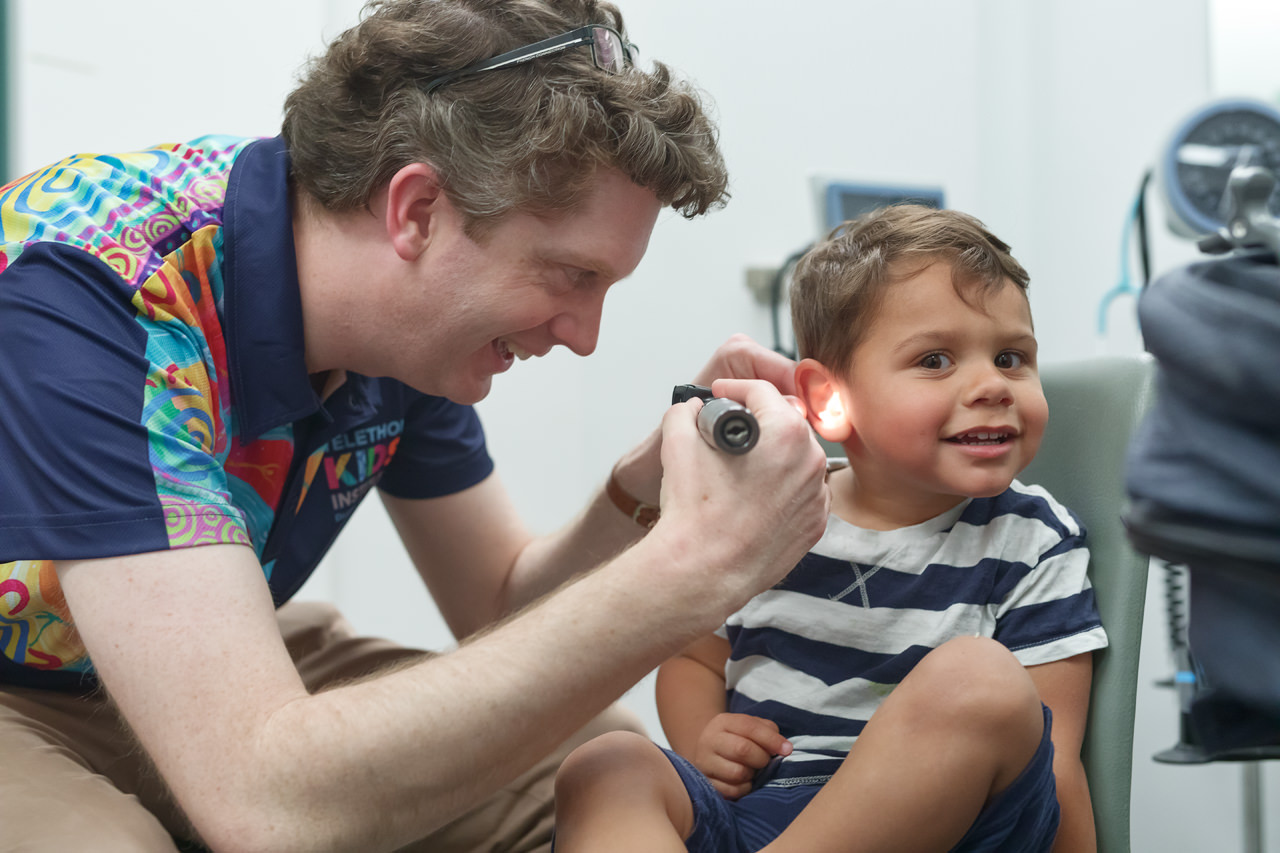
Otitis media is a common childhood illness associated with hearing loss, social disadvantage and medical costs. Prevalence and severity are high among...
We strive for a future where no child will die from brain cancer because we have developed new therapies that will cure their disease.
This paper examines whether a Vitamin D deficiency during pregnancy affects the child's lung function predisposition towards lung disease such as asthma.
At The Kids our greatest asset is our people. We are strongly invested in the future of child medical research welcoming, nurturing, and encouraging the best and most innovative Australian and international researchers.
To investigate the association between energy drink (ED) use and sleep-related disturbances in a population-based sample of young adults from the Raine Study.
Children with medulloblastoma and ependymoma are treated with a multidisciplinary approach that incorporates surgery, radiotherapy, and chemotherapy; however, overall survival rates for patients with high-risk disease remain unsatisfactory. Data indicate that plant-derived cannabinoids are effective against adult glioblastoma; however, preclinical evidence supporting their use in pediatric brain cancers is lacking. Here we investigated the potential role for Δ9-tetrahydrocannabinol (THC) and cannabidiol (CBD) in medulloblastoma and ependymoma. Dose-dependent cytotoxicity of medulloblastoma and ependymoma cells was induced by THC and CBD in vitro, and a synergistic reduction in viability was observed when both drugs were combined.
Pet ownership brings many health benefits to individuals. In children developmental benefits can extend to improved self-esteem, better social competence and decreased loneliness. The majority of households with children own a dog, however only a small proportion of children gain the benefits of dog ownership through dog walking and play. There are few intervention studies investigating the impact of dog-facilitated physical activity in children. The PLAYCE PAWS study aims to test a minimal-contact intervention through the use of mobile health ("mhealth") strategies, i.e. text (SMS) messages, to parents to encourage their children to walk and play with their dog more, and evaluate the impact on children's overall physical activity and development.
Vitamin D deficiency (serum 25-hydroxyvitamin D (25(OH)D) concentration <50 nmol/l) is recognised as a public health problem globally. The present study details the prevalence and predictors of vitamin D deficiency in a nationally representative sample (n 3250) of Australian Aboriginal and Torres Strait Islander adults aged ≥18 years. We used data from the 2012-2013 Australian Aboriginal and Torres Strait Islander Health Survey (AATSIHS). Serum 25(OH)D concentrations were measured by liquid chromatography-tandem MS.