Skip to content

Search

Showing results for "aboriginal respiratory"

The role of fit testing N95/FFP2/FFP3 masks: a narrative review

For healthcare workers performing aerosol-generating procedures during the COVID-19 pandemic, well fitted filtering facepiece respirators, for example, N95/FFP2 or N99/FFP3 masks, are recommended as part of personal protective equipment. In this review, we evaluate the role of fit checking and fit testing of respirators, in addition to airborne protection provided by respirators. Filtering facepiece respirators are made of material with sufficient high filter capacity to protect against airborne respiratory viruses.

Azithromycin reduces airway inflammation induced by human rhinovirus in lung allograft recipients

Our data illustrate that rhinovirus infection is capable of infecting upper and lower airway epithelial cells, driving cell death and inflammation

Immunological processes driving IgE sensitisation and disease development in males and females

In this review, we discuss recent mechanistic studies casting further light on how the expression of sex hormones may influence the innate and adaptive immune system

The Impact of Modulator therapy from Early life on lung health trajectories in Cystic Fibrosis (TIME-CF)

Cystic fibrosis is an inherited condition that results in chronic lung disease. In recent years, a new type of medication called CFTR modulators has become available.

Immune patterns linked to childhood asthma risk

New research digs deeper into how children's immune systems handle viral challenges

Type-2 diabetes epigenetic biomarkers: present status and future directions for global and Indigenous health

Type-2 diabetes is a systemic condition with rising global prevalence, disproportionately affecting Indigenous communities worldwide. Recent advances in epigenomics methods, particularly in DNA methylation detection, have enabled the discovery of associations between epigenetic changes and Type-2 diabetes. In this review, we summarise DNA methylation profiling methods, and discuss how these technologies can facilitate the discovery of epigenomic biomarkers for Type-2 diabetes. 

Designing a paediatric teleotology pilot in the UK: Outcomes from a scoping review of the literature, with insights from the Ear Portal pilot service in Perth, Western Australia

To inform the design of a United Kingdom (UK) paediatric teleotology pilot by analysing global teleotology initiatives and drawing on insights from a successful paediatric teleotology pilot service in Perth, Western Australia (Ear Portal).

A call to action: the second Lancet Commission on adolescent health and wellbeing

Adolescents are the future leaders of our world. Ensuring their health and wellbeing—now and in the future—is one of the strongest mechanisms available to safeguard the collective future of humanity and to secure a more just society and a healthier and more productive planet. 

Three new Board appointments at The Kids

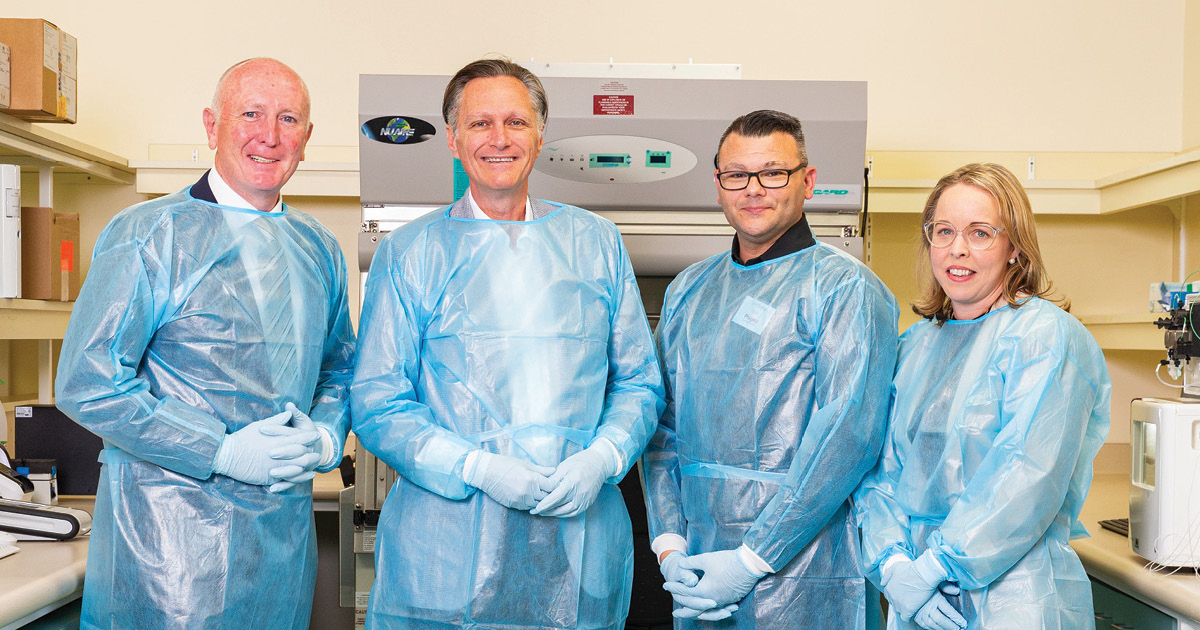
Perth's The Kids Research Institute Australia is excited to announce the appointment of Professor Alex Brown, Ms Nicole O'Connor and Professor Jozef Gecz to its Board.