
Search
Showing results for "aboriginal respiratory"
Review of the viral sensing pathways and organizing principles that govern the innate immune response to infection

Mapping when Respiratory Syncytal Virus (RSV) reaches its seasonal peak will assist how future vaccination programs are carried out.
To establish the burden of respiratory illness in cerebral palsy (CP) on the Western Australian health care system by quantifying the costs of respiratory hospitalizations in children with CP, compared with non-respiratory hospitalizations.
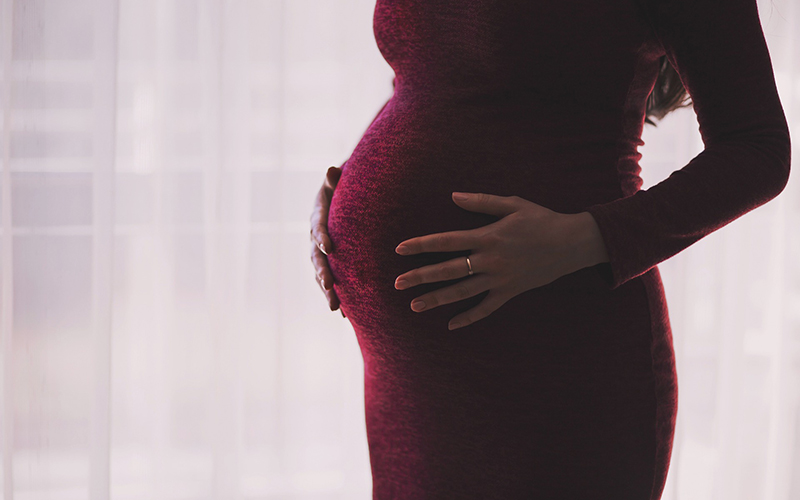
Perth respiratory researchers have discovered that giving an immune booster to mothers during pregnancy could increase their newborns’ resistance to severe and life-threatening respiratory viral infections.
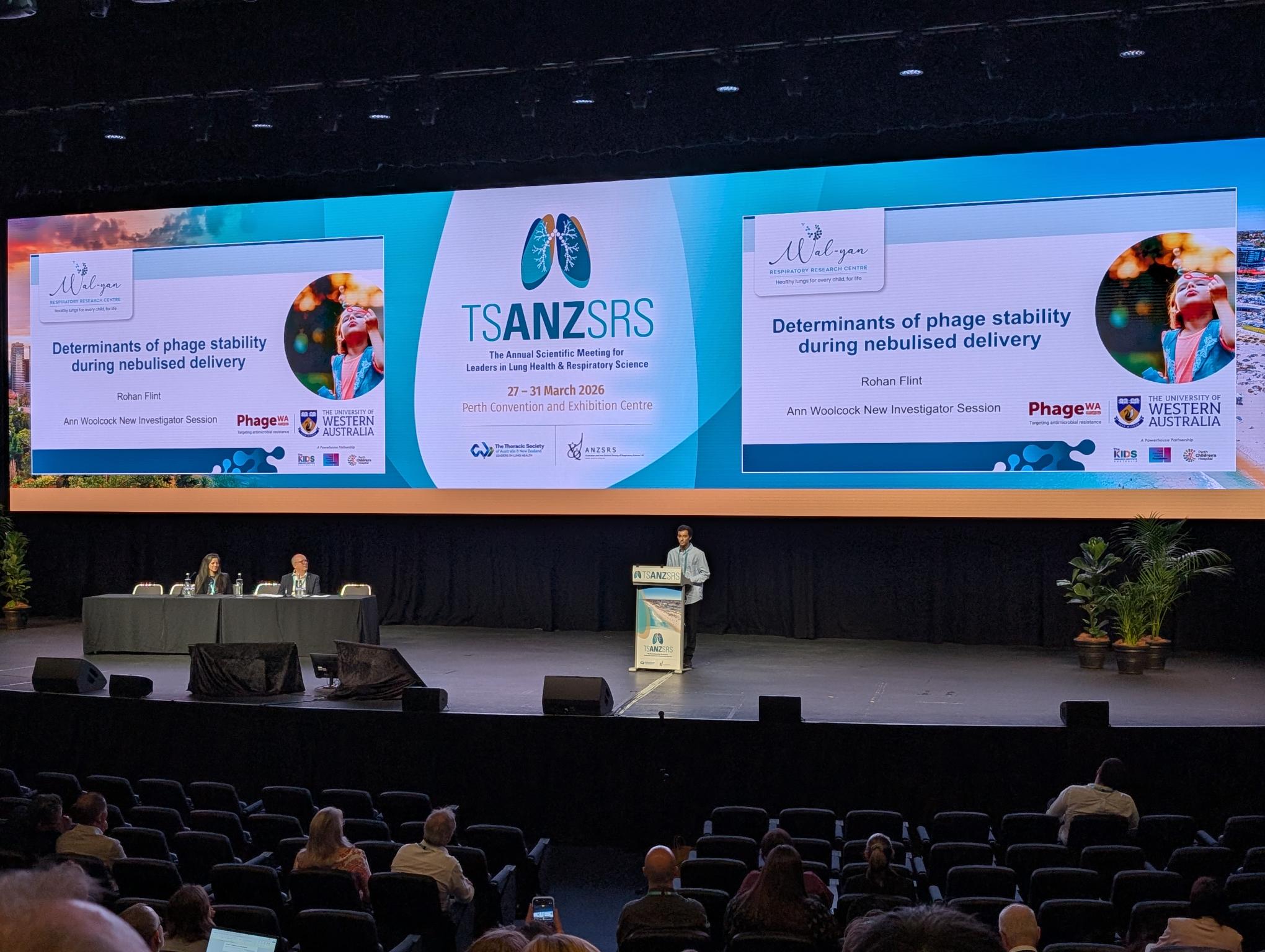
Wal-yan Respiratory Research Centre was well represented at this year's Thoracic Society of Australia and New Zealand and Society of Respiratory Science (TSANZSRS) Annual Scientific Meeting.
Once thought to be a simple barrier to the external environment, epithelial cells are involved in many repair and inflammatory processes that occur in childhood airway diseases.
Genotype-phenotype associations relating to bronchitis and allergy susceptibility are dependent on the environment
We have previously demonstrated that mice exposed to geogenic dust PM10 experienced an exacerbation of inflammatory responses to influenza A virus.

Early respiratory viral infections in infants with cystic fibrosis. Abstract Background: Viral infections contribute to morbidity in cystic fibrosis
This research project is a collaboration between The Kids Research Institute Australia, Muscular Dystrophy Western Australia, Perth Children’s Hospital and Curtin University.