
Search
Showing results for "early lung health"
Yasmin Harman-Smith BA, BHlthSc(Hons), MTeach(Primary), PhD Head, Early Years Systems Evidence Yasmin.harman-smith@thekids.org.au Head, Early Years
Fetal exposure to maternal smoking during pregnancy is associated with the development of noncommunicable diseases in the offspring. Maternal smoking may induce such long-term effects through persistent changes in the DNA methylome, which therefore hold the potential to be used as a biomarker of this early life exposure. With declining costs for measuring DNA methylation, we aimed to develop a DNA methylation score that can be used on adolescent DNA methylation data and thereby generate a score for in utero cigarette smoke exposure.
Father-child attachment during the first five years of life plays a vital role in child health and wellbeing but remains an under-researched area. Recently, self-compassion has emerged as a mechanism through which parent–child attachment may be optimized via its capacity to promote parental mental health and wellbeing, yet little is known about self-compassion among fathers specifically.
The COAG commitment to invest in young Aboriginal children will produce immediate and real community benefits.
The Australian Guide to the Diagnosis of fetal alcohol spectrum disorder (FASD), developed in 2016, is currently under review. This study aimed to understand how the Guide is used in practice and identify factors influencing its implementation.
Pregnancy marks the transition from childlessness to parenthood, and provides an opportunity for parents-to-be to prepare, research and reflect.
Language disorder is highly prevalent in youth justice; however, orofacial, oromotor, speech, and voice anomalies have been largely overlooked. There has been some documentation of these among individuals with prenatal alcohol exposure (PAE), and adolescents with PAE are over-represented in youth justice.
Prenatal alcohol exposure (PAE) is associated with growth deficits and neurodevelopmental impairment including foetal alcohol spectrum disorder (FASD). Difficulties with oral and written communication skills are common among children with PAE; however, less is known about how communication skills of adolescents who have PAE compare with those who do not.
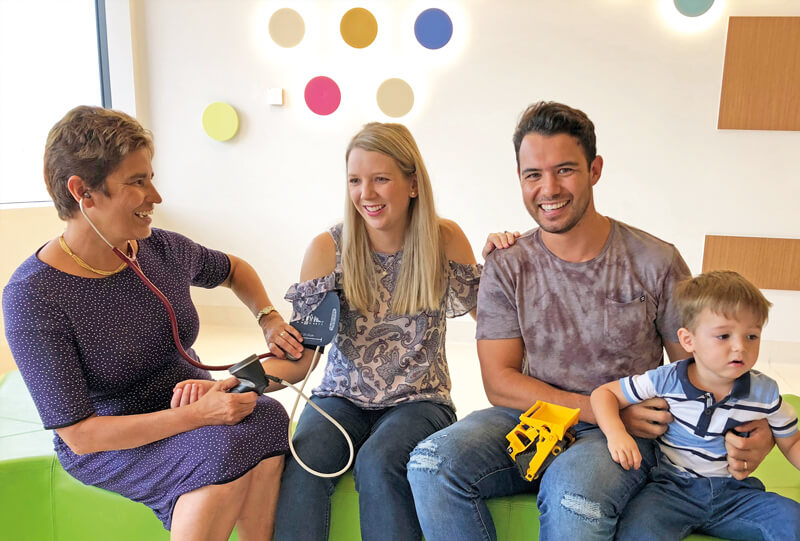
A Quinns Rocks family who became the 1000th family to sign up for the ORIGINS Project is excited to be contributing to such ground-breaking research.
To examine the longitudinal effects of dog ownership and dog walking on self-reported and objective measures of physical function in mid- to older-aged adults.