Search
Our goal is to accelerate the dissemination and implementation of evidence-based models of care for children and young people living with Type 1 Diabetes.
A new research study conducted by Professor Jeneva Ohan and Dr Keely Bebbington aims to develop our understanding of how adolescents navigate these disclosure decisions, and how we can support them to feel more confident when talking to others about their diabetes.
Given limited data regarding the involvement of disadvantaged groups in paediatric diabetes clinical trials, this study aimed to evaluate the socioeconomic representativeness of participants recruited into a multinational clinical trial in relation to regional and national type 1 diabetes reference populations.
The COVID-19 pandemic has seen evidence and advice evolve quickly. Since the start of the pandemic there has been confusion and concern about breastfeeding and COVID-19, and advice for this group has at times been contradictory. The volume of information on social media has exacerbated this. This study aimed to understand breastfeeding-related COVID-19 information sharing on social media during the global and Australian vaccine roll-out.
To assess relationships between continuous glucose monitoring (CGM) time in range (TIR), 70-180 mg/dL, time below range (TBR), <70 mg/dL, time above range (TAR), >180 mg/dL, and glucose coefficient of variation (CV) in relation to currently recommended clinical CGM targets for older people, which recommend reduced TIR and TBR targets relative to the general type 1 diabetes population.
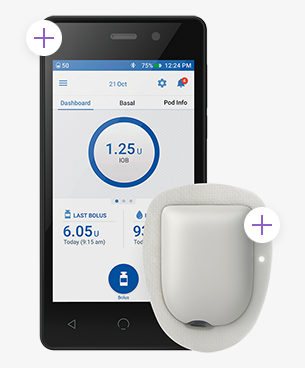
Technology use, including continuous glucose monitoring (CGM) and insulin pump therapy, is associated with improved outcomes in youth with type 1 diabetes (T1D). In 2017 CGM was universally funded for youth with T1D in Australia. In contrast, pump access is primarily accessed through private health insurance, self-funding or philanthropy.
Autoantibodies to pancreatic islet antigens identify young children at high risk of type 1 diabetes. On a background of genetic susceptibility, islet autoimmunity is thought to be driven by environmental factors, of which enteric viruses are prime candidates.
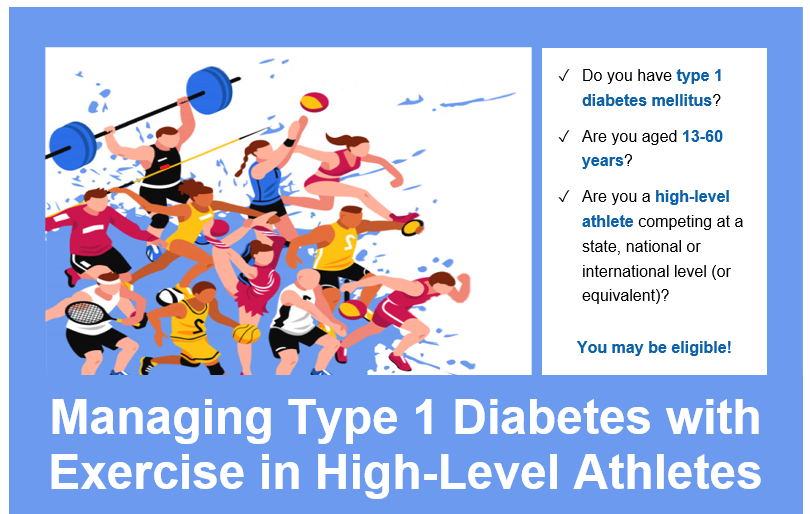
Regular physical activity and exercise are important for youth and essential components of a healthy lifestyle. For youth with type 1 diabetes, regular physical activity can promote cardiovascular fitness, bone health, insulin sensitivity, and glucose management. However, the number of youth with type 1 diabetes who regularly meet minimum physical activity guidelines is low, and many encounter barriers to regular physical activity.
In Australia, access to insulin pump therapy for children with type 1 diabetes is predominantly restricted to families with private health insurance. In an attempt to improve equity, additional subsidised pathways exist which provide pumps to families with reduced financial resources. We aimed to describe the outcomes and experiences of families with children commenced on pumps through these subsidised pathways in Western Australia.
Type 1 diabetes is well-recognised as a continuum heralded by the development of islet autoantibodies, progression to islet autoimmunity causing beta cell destruction, culminating in insulin deficiency and clinical disease. Abnormalities of glucose homeostasis are known to exist well before the onset of typical symptoms.