
Search
Showing results for "Childhood interstitial lung disease "

As your child starts to lose their baby teeth, you now have a special chance to support exciting new areas of child health research
In Australian remote communities, First Nations children with otitis media (OM)-related hearing loss are disproportionately at risk of developmental delay and poor school performance, compared to those with normal hearing. Our objective was to compare OM-related hearing loss in children randomised to one of 2 pneumococcal conjugate vaccine (PCV) formulations.
Our data set provides a useful reference point for genomic studies on Aboriginal Australians
Publications from 2016 dating back to 1993 of AussieRett researchers, showing the research work into Rett syndrome and related disorders.
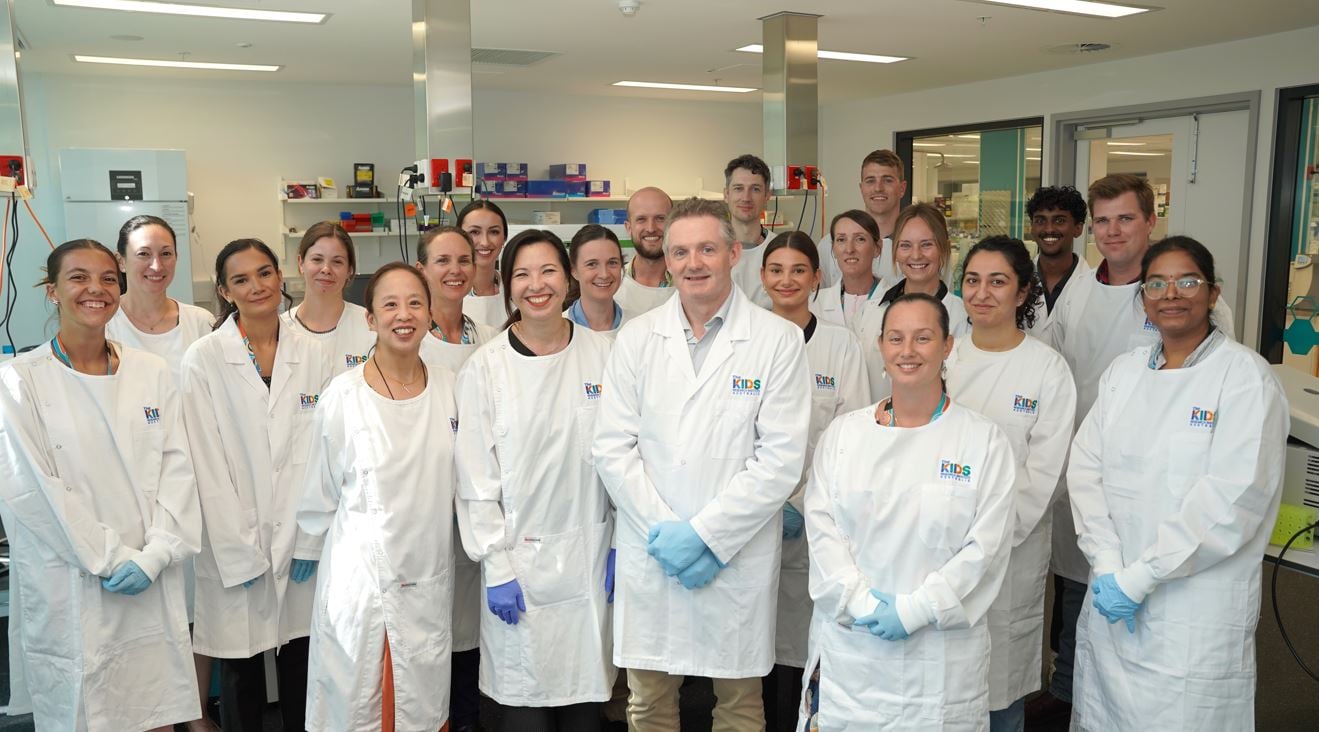
We strive for a future where no child will die from brain cancer because we have developed new therapies that will cure their disease.

The Indigenous Genomics Group aims to build Indigenous leadership in genomic and data sciences, precision health, and ethics to improve health equity and the wellbeing of Indigenous people, families and communities.

Honorary Emeritus Fellow
We have read with interest the new publication by Rouhiainen and colleagues on missed opportunities for preventing or diagnosing acute rheumatic fever (ARF).
Acute leukemia continues to be a major cause of death from disease worldwide and current chemotherapeutic agents are associated with significant morbidity in survivors. While better and safer treatments for acute leukemia are urgently needed, standard drug development pipelines are lengthy and drug repurposing therefore provides a promising approach.
At the end of a 60-day course of narrowband UVB phototherapy, administered to individuals with early multiple sclerosis, there were changes in the relative proportions of circulating B-cell subsets. This study investigated phototherapy-associated changes to cytokine responses of B cells when exposed to a TLR7 ligand.