
Search
Showing results for "vitamin d asthma"
Although many mothers initiate breastfeeding, supplementation with human-milk substitutes (formula) during the birth hospitalization is common and has been associated with early breastfeeding cessation. Colostrum hand expressed in the last few weeks before birth, known as antenatal colostrum expression (ACE), can be used instead of human-milk substitutes. However, evidence is lacking on the efficacy of ACE on breastfeeding outcomes and in non-diabetic mothers.
Individuals with borderline personality disorder (BPD) are at a substantial risk of harm to themselves and others, experience high levels of functional impairment and typically are high users of tertiary healthcare to address their mental health concerns. As indicators for BPD typically emerge in adolescence, a day therapy service in Bentley, Western Australia, Touchstone Child and Adolescent Mental Health Service (CAMHS), was developed as an intensive intervention for adolescents with indicators for BPD and its associated symptomology.
Children in Papua New Guinea (PNG) are at high risk of pneumococcal infections. We investigated pneumococcal carriage rates, serotype distribution, and antimicrobial susceptibility in PNG children after vaccination with 10-valent or 13-valent pneumococcal conjugate vaccines (PCV10; PCV13).

In this new blog, Speech Pathologist Emma Corry looks at the importance of shared attention for connection, communication and learning.
Infants with KMT2A-rearranged B-cell acute lymphoblastic leukemia (ALL) have a dismal prognosis. Survival outcomes have remained static in recent decades despite treatment intensification and novel therapies are urgently required.
There is a lack of data on the out-of-hospital burden of acute lower respiratory infections (ALRI) in developed countries.

CIRCA DIEM is using an inexpensive set of eye masks and ear plugs to teach babies born too soon how to tell the difference between night and day – a simple skill which could have lifelong implications for their health and development.

More than 80,000 Australian children are expected to benefit as 700 childcare centres across the country trial a new program aimed at boosting declining physical activity levels.

Pioneering health consumer advocate Anne McKenzie AM has been awarded the National Health and Medical Research Council’s prestigious Consumer Engagement Award in recognition of an almost 30-year career.
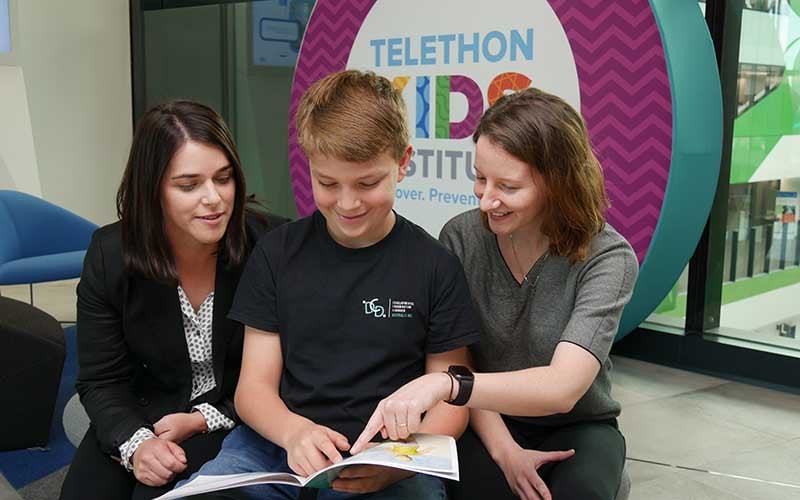
Two The Kids Research Institute Australia researchers behind a new book featuring the voices of Kids with DCD.