
Search
Showing results for "Childhood interstitial lung disease "
Antisense oligonucleotides are an emerging therapeutic option to treat diseases with known genetic origin. In the age of personalised medicines, antisense oligonucleotides can sometimes be designed to target and bypass or overcome a patient's genetic mutation, in particular those lesions that compromise normal pre-mRNA processing. Antisense oligonucleotides can alter gene expression through a variety of mechanisms as determined by the chemistry and antisense oligomer design.
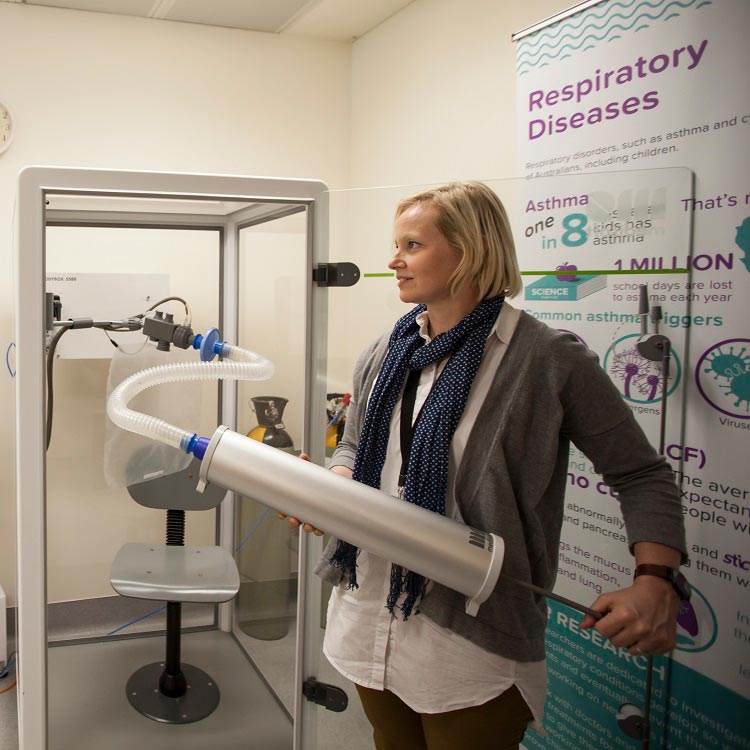
A The Kids Research Institute Australia study published in The Lancet Child & Adolescent Health has found that survivors of very preterm birth face declining lung function
This chapter deals with asbestos-related non-malignant pleural disease and mesothelioma.
There is a growing understanding that chronic respiratory diseases in adults have their origins in early life
Structural and functional defects within the lungs of children with cystic fibrosis (CF) are detectable soon after birth and progress throughout preschool years often without overt clinical signs or symptoms. By school age, most children have structural changes such as bronchiectasis or gas trapping/hypoperfusion and lung function abnormalities that persist into later life. Despite improved survival, gains in forced expiratory volume in one second (FEV1) achieved across successive birth cohorts during childhood have plateaued, and rates of FEV1 decline in adolescence and adulthood have not slowed. This suggests that interventions aimed at preventing lung disease should be targeted to mild disease and commence in early life.
Cystic fibrosis (CF), due to pathogenic variants in CFTR gene, is associated with chronic infection/inflammation responsible for airway epithelium alteration and lung function decline. Modifier genes induce phenotype variability between people with CF (pwCF) carrying the same CFTR variants. Among these, the gene encoding for the amino acid transporter SLC6A14 has been associated with lung disease severity and age of primary airway infection by the bacteria Pseudomonas aeruginosa.
Understanding early triggers of Cystic Fibrosis Lung Disease

The cumulative effect of inflammation and infection on structural lung disease in early cystic fibrosis Lung inflammation and infection are common
A significant proportion of chronic obstructive pulmonary disease exacerbations are strongly associated with rhinovirus infection (HRV). In this study, we combined long-term cigarette smoke exposure with HRV infection in a mouse model.
Identifying pediatric lung disease: A comparison of forced oscillation technique outcomes Abstract Rationale Increasing evidence suggests the forced