
Search
Showing results for "early lung health"
The aim of this project is to evaluate the efficacy of childcare centre based interventions to increase young children’s physical activity.

Australian researchers join global effort to better understand how events during pregnancy and childhood influence the development of disease later in life.
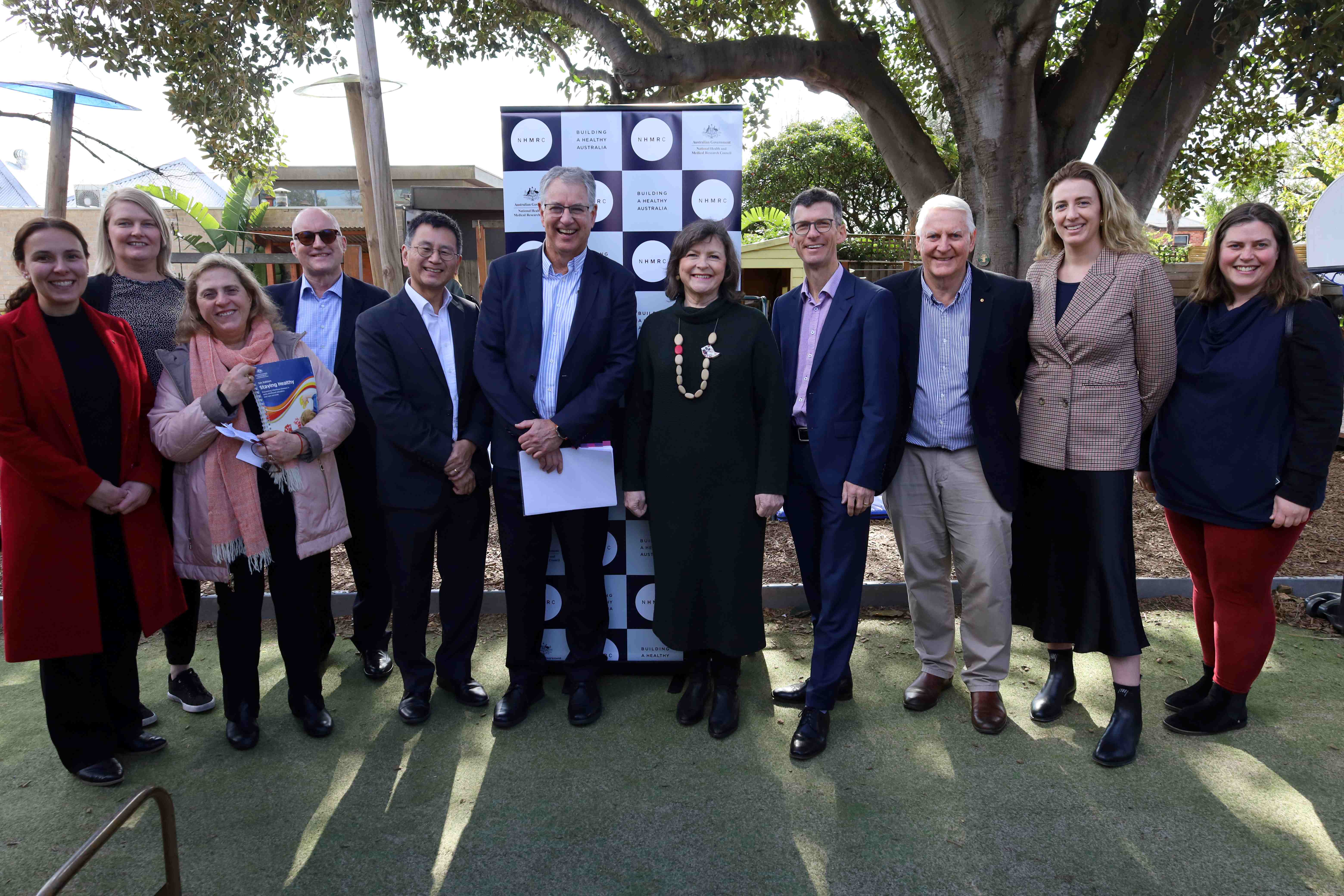
The National Health and Medical Research Council (NHMRC) has launched their sixth edition of Staying healthy: Preventing infectious diseases in early childhood education and care services in a bid to tackle the transmission of germs amongst young kids.
Food allergy affects families' quality of life, can be lifelong and life-threatening, urging the identification of early modifiable risk factors. Formula feeding in the first days of life may increase the risk of cow's milk allergy, a risk often attributed to cow's milk allergens exposure. Early formula feeding also reduces the colostrum intake, the first 3 days' milk, which is rich in bioactive compounds critical for immune and gut health. This study investigates whether partial colostrum feeding increases the risk of food allergy beyond cow's milk.
The findings suggest consistency between caregivers in their reports of the difficulties experienced by children with Fetal Alcohol Spectrum Disorder
SMS4RRdads is a digital prevention and early intervention service that will engage, screen and support expectant and new fathers experiencing or at risk of perinatal mental illness.
The EQ-5D-Y-5L is a generic preference-based measure of health-related quality of life for children. This study aimed to describe the distributional properties, test-retest reliability, and convergent validity of the EQ-5D-Y-5L in children with intellectual disability (ID).
Children who were exposed to a maternal alcohol use disorder had significantly increased odds of contact with the justice system.
Accumulating evidence indicates that an early, robust type 1 interferon (IFN) response to SARS-CoV-2 is important in determining COVID-19 outcomes, with an inadequate IFN response associated with disease severity. Our objective was to examine the prophylactic potential of IFN administration to limit viral transmission.
ENVISAGE is a validated evidence-based program of facilitated group workshops for parents and carers of young children, aged 0-8 years, with a newly identified disability or who have concerns regarding their child’s development.