
Search
Showing results for "clinical trials"
Promotion of periconceptional folic acid supplement use began in Australia following publication of randomised trials showing effectiveness.
The mental health and wellbeing of young people has important consequences for students and society. Schools are a logical environment for management and early intervention of wellbeing, mental health and engagement with school. Interventions aimed at improving mental health and wellbeing in education systems requires knowledge of how wellbeing is clustered at a school level. Cluster-randomised trials, and regression analyses of such data also require knowledge of clustering.
After randomized, controlled trials established that consumption of folic acid before pregnancy and during the early weeks of gestation reduces the risk...
Perth researchers are calling for help from Perth toddlers and their parents to participate in a new project that aims to reduce the number of injections
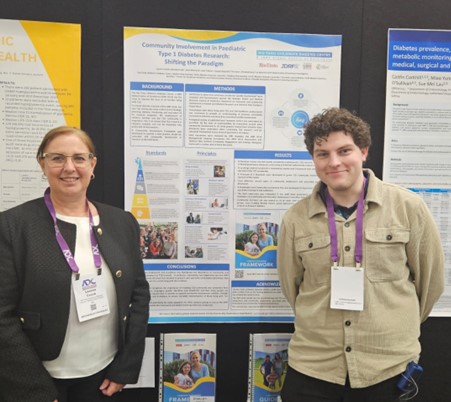
Our team had a few busy days presenting posters, chairing expert panels, delivering presentations and catching up with colleagues from across the world at the 2024 ADC Conference in Perth.
In this study, we aimed to determine the incidence and incidence rate trends of childhood T2D in Indigenous and non-Indigenous children in WA.
Individuals identified as at ultra-high risk (UHR) for psychosis are at risk of poor functional outcome regardless of development of psychotic disorder.
Previous studies have suggested that clear HbA1c target setting by the diabetes team is associated with HbA1c outcomes in adolescents. The aim of this study was to evaluate whether this finding is consistent in a larger cohort of children from centers participating in the SWEET international diabetes registry. A questionnaire was sent out to 76 SWEET centers, of which responses from 53 pediatric centers were included (70%). Descriptive outcomes were presented as median with lower and upper quartile.
This retrospective population‐based study aimed to determine the incidence of type 2 diabetes from 2012 to 2019 in Western Australian youth aged under 16 years, and to examine temporal trends between 2000 and 2019, using data from the Western Australian Children’s Diabetes Database (WACDD). The data extracted for eligible patients diagnosed with type 2 diabetes, according to standard criteria, included diagnosis year, age, sex and self‐reported Aboriginal or Torres Strait Islander status.
Individuals with concurrent first episode of psychosis and ASD can present with distinct clinical characteristics that require specialised assessment and treatment