
Search
Showing results for "Childhood interstitial lung disease "

Amanda is a Certified Child Life Specialist and has a Bachelor of Science in Psychology and Master of Arts in Education with an emphasis on Child Life in Hospitals and Early Childhood Education.
The developing hippocampus is particularly sensitive to early environmental influences, including during pregnancy. This longitudinal neuroimaging study examined associations between prenatal maternal physical activity and depression, maternal education, and hippocampal development from early childhood to early adolescence.
Assisted reproductive technology (ART) pregnancies are at greater risk of birth defects than non-ART pregnancies. Teratogenic medication exposure is a potential cause of birth defects that has not been compared between ART and non-ART pregnancies.
We sought to investigate the long-term unemployment rate and baseline predictors of employment status at follow-up in a large ultra-high risk cohort.
How different somatosensory modalities develop across childhood into adolescence to use as a point of reference for children at risk of somatosensory
Engagement with preschool programs in Australia may present a plausible, equitable, and modifiable approach to improving children's developmental outcomes
The present study investigated the relations among maternal attachment status, mother-child emotion talk, child emotion understanding, and conduct problems...
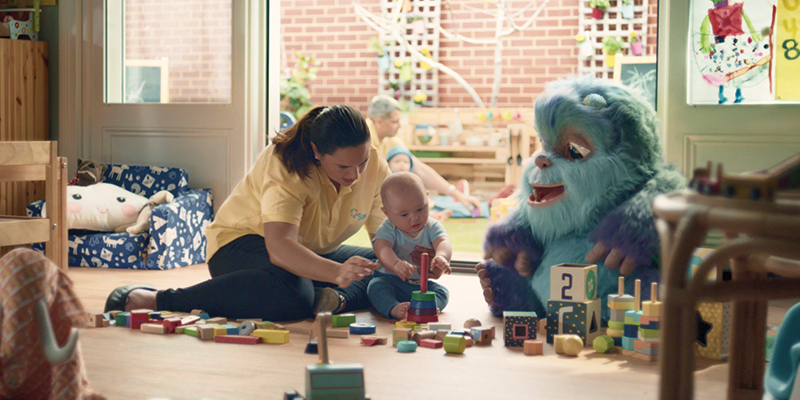
A lovable blue creature by the name of Bobbie has won the hearts and minds of Western Australians.
Current methods for assessing the healthfulness of 24-hour movement behaviours (sleep, sedentary time, light physical activity, moderate-to-vigorous physical activity) use binary classifications that fail to capture their continuous and compositional nature. This study introduces a percentile-based scoring and visualization approach to evaluate the healthfulness of movement behaviour time-use compositions, using social-emotional development in early childhood as an example.
Community Elders in Boorloo (Perth) identified early childhood education (ECE) as a priority area for Aboriginal children’s research. This is due to a lower number of Aboriginal children attending ECE programs compared to non-Aboriginal children. Attending ECE programs sets children up for school success and is an indicator for positive life outcomes in later life. Therefore, we sought to co-design and implement a program that encourages Aboriginal children and families to attend ECE programs, known as Moort Dandjoo Kaadadjiny.