
Search
Showing results for "early lung health"
The objective of this paper was to measure changes in caesarean delivery rates for primiparous women in Western Australia during 1995–2010 stratified by...
Infant vaccination with 3 doses of PCV10 or PCV13 is safe and immunogenic in a highly endemic setting
PPV is immunogenic in 9-month-old children at high risk of pneumococcal infections and does not affect the capacity to produce protective immune responses
A vaccine that prevents the initial attachment of Strep A to the tonsils would reduce the incidence of Strep throat and severe diseases that result.
Children in Papua New Guinea (PNG) are at high risk of pneumococcal infections. We investigated pneumococcal carriage rates, serotype distribution, and antimicrobial susceptibility in PNG children after vaccination with 10-valent or 13-valent pneumococcal conjugate vaccines (PCV10; PCV13).

ORIGINS sub-projects are investigating the best way to provide support to new parents and positively influence the health and development of their children.
Development of vaccines to prevent disease and death from Streptococcus pneumoniae, and nontypeable Haemophilus influenzae (NTHi), the main pathogens that cause otitis media, pneumonia, meningitis and sepsis, are a global priority.
Despite universal access to government-funded direct-acting antivirals in 2016, the rate of hepatitis C treatment uptake in Australia has declined substantially. Most hepatitis C is related to injecting drug use; reducing the hepatitis C burden among people who inject drugs is, therefore, paramount to reach hepatitis C elimination targets.
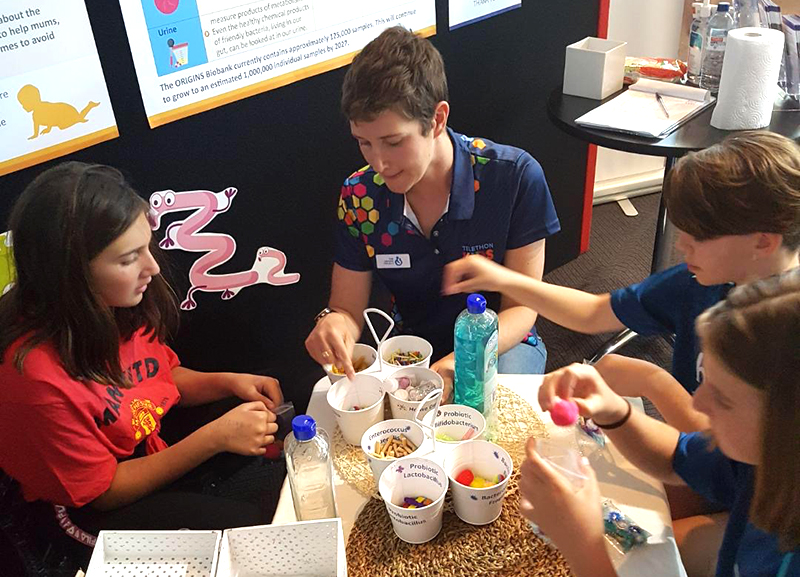
Make your very own unique microbiome using a range of textured items designed to be squeezed and squished.
Tom Snelling BMBS DTMH GDipClinEpid PhD FRACP Head, Infectious Disease Implementation Research 08 6319 1817 tom.snelling@thekids.org.au Head,