
Search
Showing results for "mental health aboriginal"
This article discusses the relationships between gut colonization & inflammatory noncommunicable diseases, in regards to their treatment and prevention.

Project D-Light aims to understand and harness the benefits of vitamin D and sunlight for Australian children while protecting them from excess UV.
The prevalence of impetigo and pharyngitis - which are both superficial group A streptococcus (GAS) infections that precede acute rheumatic fever - is poorly defined. Guidelines recommend the early diagnosis of both infections to prevent ARF; however, screening to enable the concurrent detection of these infections in high-risk populations has rarely been performed.
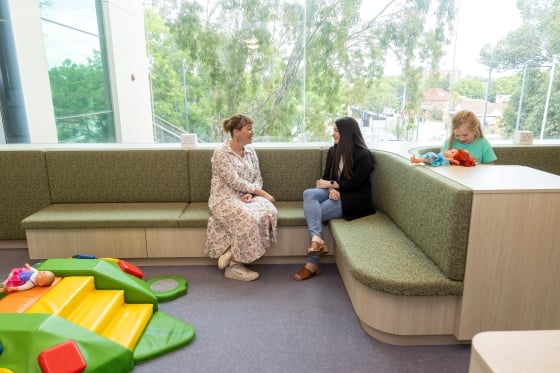
In this blog, Occupational Therapy Clinical Lead Marie Rodatz discusses the elements needed to create a neuro-affirming environment that supports neurodiverse individuals.
We investigated whether a reduction of preventable deaths from physical disorders was mediated by better access to specialized medical procedures.
Eating disorder prevalence rates were significantly greater when using DSM-5 than DSM- IV-TR criteria, at all time points for females and at age 17 only...
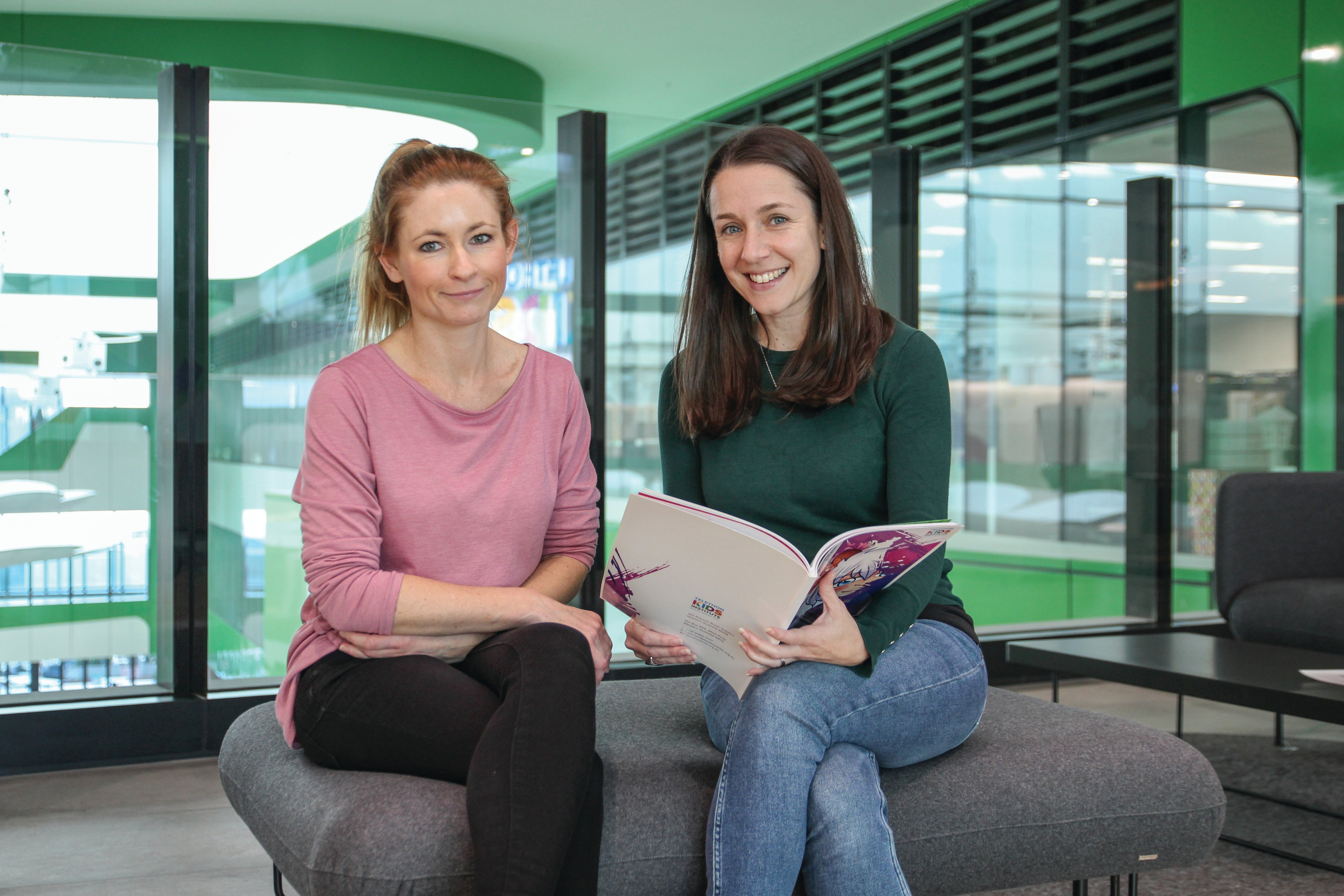
Trans or gender diverse young people are working with The Kids researchers to come up with resources that will provide better support to parents.
The school environment profoundly influences children's development, behaviours, and attitudes. This chapter delves into the relationship between school design and architecture, and their impact on bullying, victimisation, inclusivity, and student well-being. Research underscores the significant impact of school design on student social dynamics, advocating for collaborative efforts among stakeholders to craft effective anti-bullying policies.
Autistic children experience significantly higher rates of anxiety compared to nonautistic children. The precise relations between autism characteristics and anxiety symptoms remain unclear in this population. Previous work has explored associations at the domain level, which involve examining broad categories or clusters of symptoms, rather than the relationships between specific symptoms and/or individual characteristics. We addressed this gap by taking a network approach to understand the shared structure of autism characteristics and anxiety symptoms.
Interparental conflict (IPC) has the potential to adversely affect children's social, emotional, and behavioural functioning. The overall objective of this study was to investigate the relationship between both the severity and chronicity of IPC across early and middle childhood and children's emotional-behavioural functioning at 10-11 years. Specifically, we aimed to: (1) identify distinct trajectories of IPC spanning 10-11 years since birth of the study child as reported by mothers, and (2) examine the emotional-behavioural functioning of children exposed to the identified IPC trajectories.