
Search
Showing results for "lung disease preterm"
Pathogen strain diversity is an important driver of the trajectory of epidemics. The role of bioclimatic factors on the spatial distribution of dengue virus serotypes has, however, not been previously studied. Hence, we developed municipality-scale environmental suitability maps for the four dengue virus serotypes using maximum entropy modeling.
Programmable DNA endonucleases derived from bacterial genetic defense systems, exemplified by CRISPR-Cas9, have made it significantly easier to perform genomic modifications in living cells. However, unprogrammed, off-target modifications can have serious consequences, as they often disrupt the function or regulation of non-targeted genes and compromise the safety of therapeutic gene editing applications.
The genetic code that specifies the identity of amino acids incorporated into proteins during protein synthesis is almost universally conserved. Mitochondrial genomes feature deviations from the standard genetic code, including the reassignment of two arginine codons to stop codons.
Low socioeconomic status (SES), high temperature, and increasing rainfall patterns are associated with increased dengue case counts. However, the effect of climatic variables on individual dengue virus (DENV) serotypes and the extent to which serotype count affects the rate of severe dengue in Mexico have not been studied before.
Despite significant improvements in pediatric cancer survival outcomes, there remain glaring disparities in under-represented racial and ethnic groups that warrant mitigation by the scientific and clinical community. To address and work towards eliminating such disparities, the Pacific Pediatric Neuro-Oncology Consortium (PNOC) and Children's Brain Tumor Network (CBTN) established a Diversity, Equity, and Inclusion (DEI) working group in 2020. The DEI working group is dedicated to improving access to care for all pediatric patients with central nervous system (CNS) tumors, broadening diversity within the research community, and providing sustainable data-driven solutions.
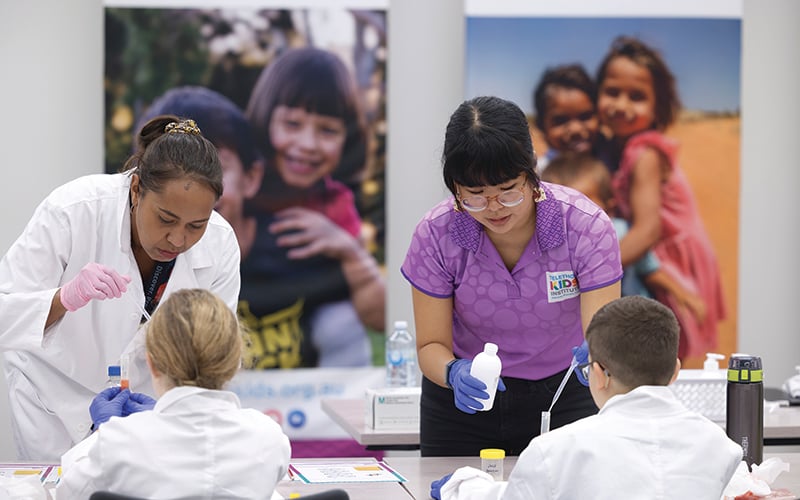
Strawberries, slime and sliced bread are being used as tools to educate and inspire the next generation of researchers, as part of the The Kids Discovery Centre Schools & Outreach Program.
Although clinical trials are fundamental to advancing evidence-based practice, significant heterogeneity in outcome reporting poses a considerable challenge to the validity of systematic reviews. This inconsistency impedes the ability to compare, synthesise and interpret research findings effectively. In the field of paediatric airway management, this issue is particularly relevant because of the low incidence of critical events and the related high morbidity and mortality. The issue of inadequate and variable outcome reporting in clinical trials has been widely acknowledged, necessitating initiatives to enhance the quality of future research.
Little evidence exists on the postoperative trajectory after paediatric orthopaedic surgery. Pain and behavioural disturbance can have short- and long-term impacts on children and their families. An improved understanding of procedure-specific postoperative trajectories can enhance recovery. The primary outcome was to examine the duration and severity of postoperative pain experienced by children undergoing 10 commonly performed orthopaedic procedures.
Peri-operative respiratory adverse events remain a major cause of morbidity and mortality in children undergoing general anaesthesia; those with asthma are at higher risk. The aim of this feasibility study was to determine whether pre-operative measurements of fractional exhaled nitric oxide and the forced oscillation technique are feasible in children, and to explore whether these measurements can predict peri-operative respiratory adverse events.
Processed electroencephalography (EEG) indices used to guide anesthetic dosing in adults are not validated in young infants. Raw EEG can be processed mathematically, yielding quantitative EEG parameters (qEEG). We hypothesized that machine learning combined with qEEG can accurately classify expired sevoflurane concentrations in young infants. Knowledge from this may contribute to development of future infant-specific EEG algorithms.