
Search
Showing results for "lung disease preterm"
The COVID-19 pandemic introduced challenges to everyone in society but particularly so to every aspect of medical practice. It is bewildering how quickly the profession has had to respond to rapidly changing clinical landscape. Our well-established methods involve collecting and analyzing data to generate an evidence base which is then disseminated and implemented into routine clinical practice.
We introduce C1 CAGE, a method for the detection of transcript 5'-ends with an original sample multiplexing strategy in the C1TM microfluidic system

Congratulations to Dr Gail Alvares and Dr Rachel Foong, who have been awarded funding from the Raine Medical Research Foundation.
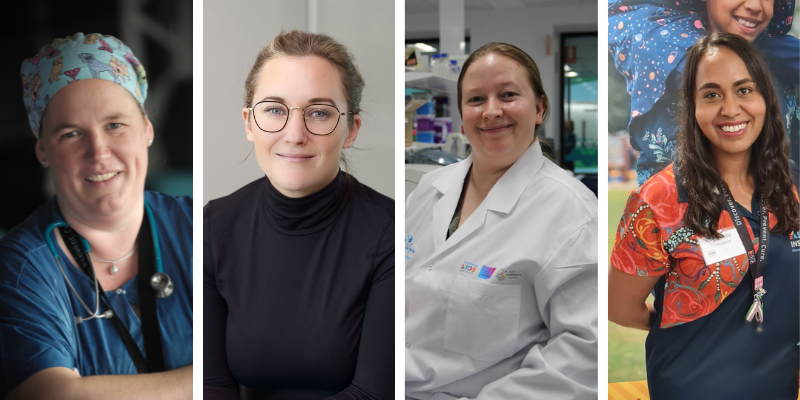
Four The Kids Research Institute Australia researchers – working across diverse fields including paediatric anaesthesia, bioinformatics, ear health, and the health impacts of biodiesel exhaust – have been named as finalists in the 2021 Premier’s Science Awards.

Whooping cough (pertussis) is a highly contagious respiratory infection which causes a severe cough and can be particularly dangerous to babies under a year old. Vaccination is the best way to reduce the risk of whooping cough.
Perioperative respiratory adverse events (PRAE) are a main cause of morbidity and mortality in paediatric anaesthesia. Clinicians need to be able to predict their patients' risk of PRAE to plan their care. Clinical risk prediction tools have been developed to assist with pre-operative risk stratification; however, validation outside the contexts of their development is limited. In this study, we test the ability of common risk prediction tools to identify patients at high risk of PRAE in general anaesthesia.
The social determinants of health, as described by the World Health Organisation (WHO), are 'the non-medical factors' that influence health outcomes. They are the conditions in which people are born, grow, work, live, and age, and the wider set of forces and systems shaping the conditions of daily life. According to the WHO, social determinants of health account for between 30-55% of health outcomes, and children can be particularly vulnerable to their impacts.
This article reflects on deeply ingrained societal biases with regard to gender. Patriarchal structures and gender socialization have created a perceived incongruity between traditional leadership qualities and traits associated with women. This perception, explained by the role congruity theory, contributes to prejudice against female leaders and can lead to toxic male behavior being misidentified as "strong" leadership. We further examine cognitive shortcuts, specifically implicit bias and the affect heuristic, which perpetuate unconscious favoritism towards male leaders.
Perioperative anxiety is a common and distressing aspect of anaesthesia for many children, resulting in management challenges at the time of anaesthesia and potential physical and psychological adverse outcomes. We conducted this qualitative phenomenological study to explore the perspectives of children, parents and staff on perioperative anxiety in our institution. Planned recruitment was 20 each of children who had undergone elective anaesthesia, their parents and staff.
Children are sometimes transported via fixed or rotary wing aircraft for medical care. If they are intubated with a cuffed endotracheal tube (ETT), changes in environmental pressure during transport can alter cuff pressure. Cuff management in this setting varies widely by region and by organization. In this historical review, we sought to delineate the evolution of ETT cuff management in children undergoing aeromedical retrieval in order to progress the field toward an optimum strategy in the future.