
Search
Showing results for "aboriginal respiratory"
Amidst growing concerns over heightened natural disaster risks, this study pioneers an inquiry into the causal impacts of cyclones on the demand for private health insurance in Australia. We amalgamate a nationally representative longitudinal dataset with historical cyclone records, employing an individual fixed effects model to assess the impacts of various exogenously determined cyclone exposure measures.
This is the first update of a Cochrane review published in 2020. Chronic suppurative otitis media (CSOM), sometimes referred to as chronic otitis media, is a chronic inflammation and often polymicrobial infection of the middle ear and mastoid cavity, characterised by ear discharge (otorrhoea) through a perforated tympanic membrane. The predominant symptoms of CSOM are ear discharge and hearing loss. Aural toileting describes processes for manually cleaning the ear, including dry mopping (with cotton wool or tissue paper), suction clearance (typically under a microscope), or irrigation (using manual or automated syringing). Aural toileting can be used alone or in addition to other treatments for CSOM, such as antibiotics or topical antiseptics. This is one of a suite of seven Cochrane reviews evaluating the effects of non-surgical interventions for CSOM.
Climate change is both an environmental crisis and a growing source of psychological distress for young people, calling for responses that nurture emotional resilience and collective engagement. The emerging response to climate distress has mainly focused on formal psychological and individual-level interventions.
On this Research Impact page, we showcase real game-changers - research that changes the very way other scientists around the world think and approach challenges. The far-reaching impact on children and families for all the stories shown on these pages is both exciting and significant.
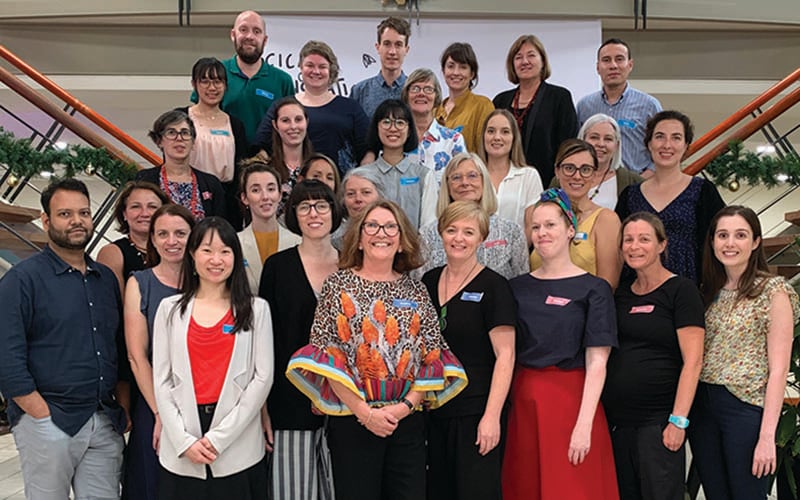
The FASD Research Australia Centre of Research Excellence (CRE) has substantially built the evidence base around FASD and had a significant impact on advocacy, policy and practice.
Amidst the evolving COVID-19 pandemic, understanding the transmission dynamics of the SARS-CoV-2 virus is key to providing peace of mind for the community and informing policy-making decisions. While available data suggest that school-aged children are not significant spreaders of SARS-CoV-2, the possibility of transmission in schools remains an ongoing concern, especially among an aging teaching workforce. Even in low-prevalence settings, communities must balance the potential risk of transmission with the need for students' ongoing education.
Video otoscopy plays an important role in improving access to ear health services. This study investigated the clinician-rated quality of video otoscopy recordings and still images, and compared their suitability for asynchronous diagnosis of middle-ear disease. Two hundred and eighty video otoscopy image-recording pairs were collected from 150 children (aged six months to 15 years) by an ear, nose, and throat (ENT) specialist, audiologists, and trained research assistants, and independently rated by an audiologist and ENT surgeon.
Reflections and perceptions of chronic tinnitus during childhood
We reflect on the lessons learned from a recent genome‐wide association study of rheumatic heart disease with Aboriginal Australian participants
The effects of maternal alcohol-use disorder are experienced by the majority of exposed children rather than a vulnerable subgroup of this population