
Search
Showing results for "aboriginal respiratory"
Inguinal hernia surgery is one of the most common electively performed surgeries in infants. The common nature of inguinal hernia combined with the high-risk population involving a predominance of preterm infants makes this a particular area of interest for those concerned with their perioperative care. Despite a large volume of literature in the area of infant inguinal hernia surgery, there remains much debate amongst anesthetists, surgeons and neonatologists regarding the optimal perioperative management of these patients.
Obstructive sleep apnea (OSA) increases the risk of perioperative adverse events in children. While polysomnography remains the reference standard for OSA diagnosis, oximetry is a valuable screening tool. The traditional practice is the manual analysis of desaturation clusters derived from a tabletop device using the McGill oximetry score. However, automated analysis of wearable oximetry data can be an alternative. This study investigated the accuracy of wrist-worn oximetry with automated analysis as a preoperative OSA screening tool.
Flucloxacillin is prescribed to treat skin infections but its highly bitter taste is poorly tolerated in children. This work describes the application of the D-optimal mixture experimental design to identify the optimal component ratio of flucloxacillin, Eudragit EPO and palmitic acid to prepare flucloxacillin taste-masked microparticles that would be stable to storage and would inhibit flucloxacillin release in the oral cavity while facilitating the total release of the flucloxacillin load in the lower gastrointestinal tract.
We investigated how syndromic versus nonsyndromic forms of micrognathia impacted difficult intubation outcomes in children. Primary outcome was the first-attempt success rate of tracheal intubation, secondary outcomes were number of intubation attempts and complications. We hypothesized that syndromic micrognathia would be associated with lower first-attempt success rate.
Patient positioning interacts with a number of body systems and can impact clinically important perioperative outcomes. In this educational review, we present the available evidence on the impact that patient positioning can have in the pediatric perioperative setting. A literature search was conducted using search terms that focused on pediatric perioperative outcomes prioritized by contemporary research in this area.
Preoperative anxiety is common in children. It can contribute to negative experiences with anesthetic induction and may cause adverse physiological and psychological effects. Virtual reality (VR) and electronic tablet devices are 2 audiovisual distraction tools that may help to reduce anxiety and enhance the preoperative experience. This study aimed to compare the use of an immersive 3-dimensional (3D) VR to 2-dimensional (2D) video on anxiety in children during induction of general anesthesia.
Seasonal malaria chemoprevention (SMC) is recommended for disease control in settings with moderate to high Plasmodium falciparum transmission and currently depends on the administration of sulfadoxine-pyrimethamine plus amodiaquine.
Despite the use of dual antiemetic agents, postoperative nausea and vomiting (PONV) occurs in an unacceptably large number of patients post-tonsillectomy. There has been increased interest in alternative and non-pharmacological treatments for PONV e.g., chewing gum. We investigated if chewing a large confectionary jelly snake had prophylactic antiemetic effects postoperatively in young children.
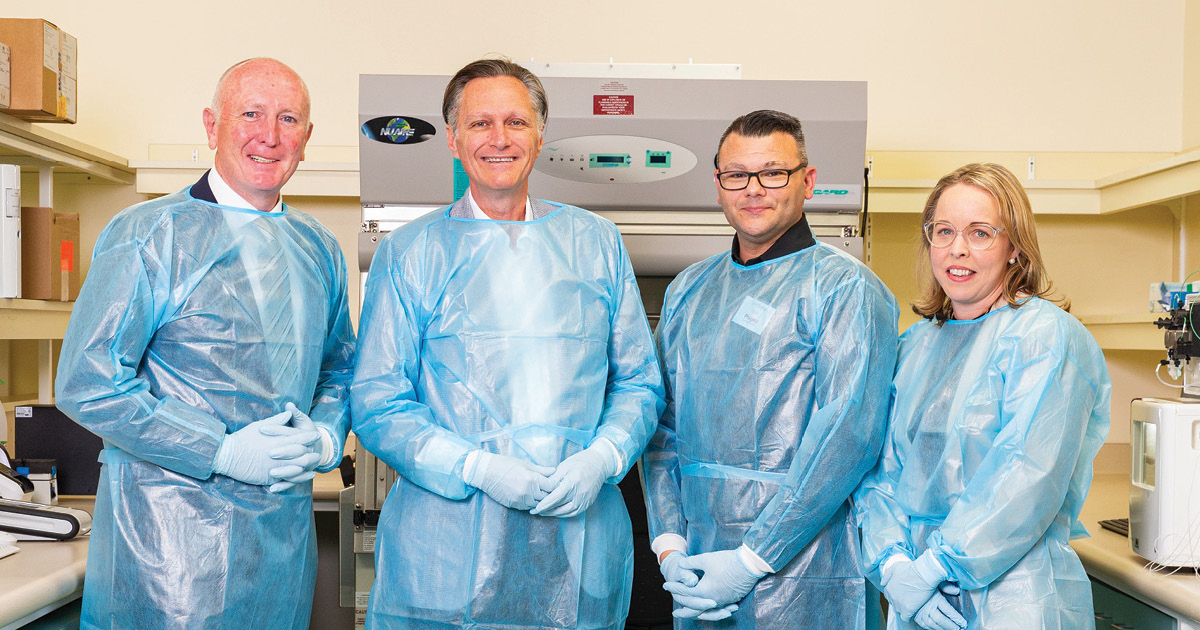
Western Australia’s first bacteriophage manufacturing facility has been opened in a significant development that brings patients battling antibiotic-resistant infections a step closer to life-saving phage therapy.
Clinical utility of home polysomnography in children with neuromuscular disorders is limited by lack of evidence that sleep-disordered breathing can be reliably identified and inability to diagnose hypoventilation because carbon dioxide is not measured.