
Search
Showing results for "mental health aboriginal"
Understanding if ongoing inflammation in the lungs contributes to the poor lung health experienced by some children who were born preterm.
Pneumonia is the leading cause of death in young children globally and is prevalent in the Papua New Guinea highlands. We investigated clinical predictors of hypoxic pneumonia to inform local treatment guidelines in this resource-limited setting.
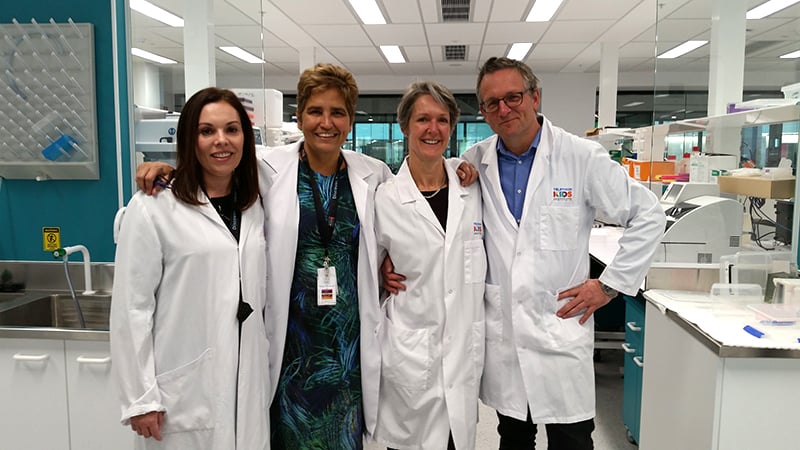
Dr Michael Mosley recently visited The Kids Research Institute Australia to talk about DOHaD and the importance of good gut health.
Prevalence of allergic diseases in infants, whose parents and siblings do not have allergy, is approximately 10% and reaches 20-30% in those with an allergic...
Infant growth trajectories reflect current health status and may predict future obesity and metabolic diseases. Human milk is tailored to support optimal infant growth. However, nutrient intake rather than milk composition more accurately predicts growth outcomes. Although the role of protein leverage in infant growth is unclear, protein intake is important for early infancy growth.

Researchers have developed Australia’s first comprehensive guidelines for clinical and community services supporting LGBTQA+ youth.
Emerging research suggests that maternal immune activation (MIA) may be associated with an increased risk of adverse neurodevelopmental and mental health outcomes in offspring. Using data from the Raine Study, we investigated whether MIA during pregnancy was associated with increased behavioral and emotional problems in offspring longitudinally across development.
In this review, we describe both the mechanisms and the therapeutic evidence from preclinical and clinical studies exploring the role of prebiotics in allergy prevention
Early life innate immune dysfunction may represent a key immunological driver and predictor of persistent food allergy in childhood
Supplementation with n-3 LCPUFA in infancy revealed a reduction in waist circumference at 5 years