
Search
Showing results for "early lung health"
Many clinicians in New Zealand do not follow guidelines for best practice in autism diagnosis. In this study, we investigated the processes that health professionals in New Zealand follow when diagnosing autistic children and adults. We asked 117 health professionals from a range of services and regions in New Zealand, how they identify and diagnose autism.
This study helps us understand how cancer cells are regulated by key genes and their corresponding networks to alter their fate in response to specific...
This study reports that telomerase reverse transcriptase extensively affects the expression levels of mature microRNAs.
The FANTOM5 cerebellum time series is a high-quality transcriptome database for functional investigation of gene regulatory networks in cerebellar development
Agreement between the DDD and vial-based measures of use supports the use of DDD for select antibiotics that may be targeted by antimicrobial stewardship programs
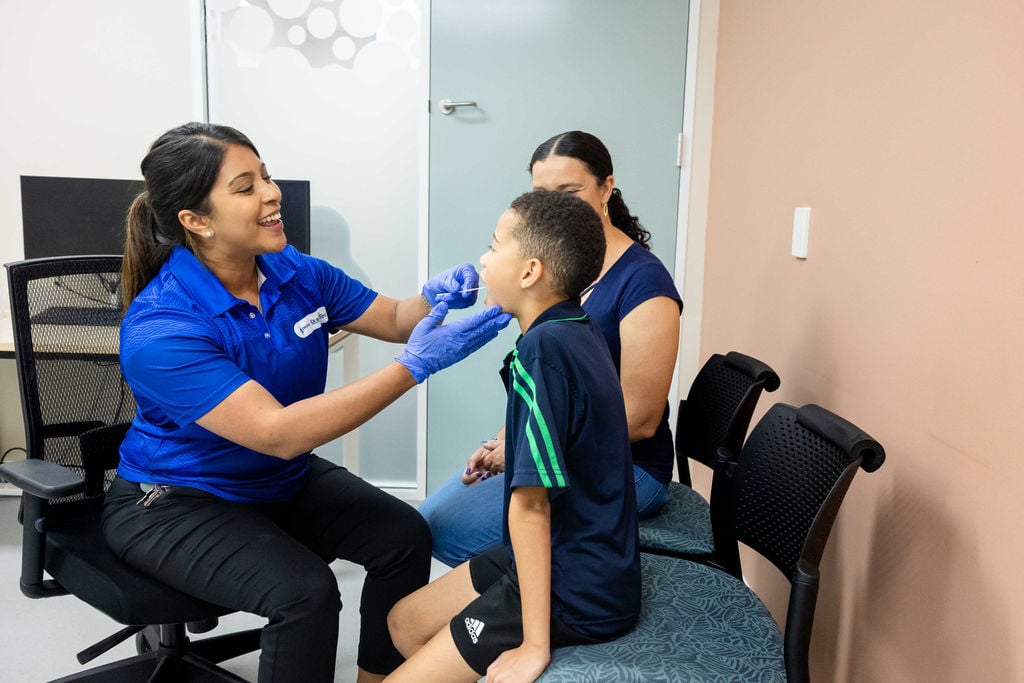
This sub-project aims to understand why some people develop long-term health problems after COVID-19 and to identify biological markers that can help doctors predict who is most at risk and how to treat them.
Characterised by varying degrees of difficulties in communication skills and social abilities, one in every 100 individuals will have a diagnosis of an autism spectrum condition. While autism is known to run in families, the exact causes remain unknown.
Find out more about our research into Aboriginal social and emotional wellbeing

This project aims to improve the cultural safety and effectiveness of mainstream mental health services for Aboriginal and Torres Strait Islander children and families.
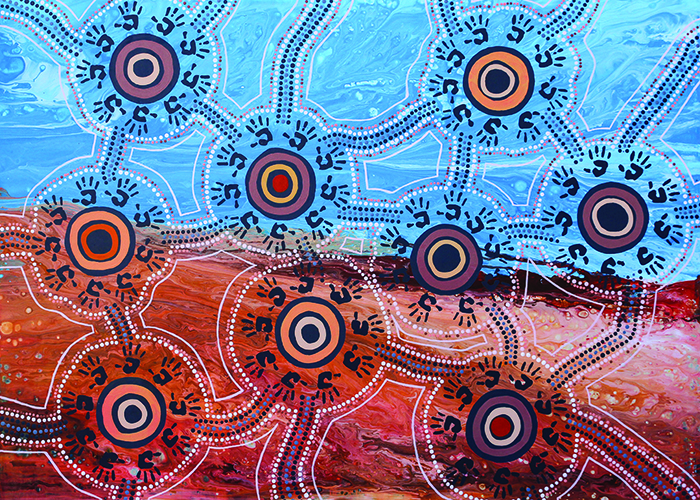
Hip Hop 2 SToP video It didn’t take long for shyness to make way for excitement when a group of children from Dampier Peninsula communities got