
Search
Showing results for "early childhood"
The success of cancer immunotherapies has highlighted the importance of monitoring the anti-tumour T cell response. Patients with mesothelioma frequently present with a malignant pleural effusion (MPE) that is commonly drained regularly to alleviate symptoms. As MPE contains tumour cells, T cells and cytokines, it provides a unique opportunity to sample immune events at the tumour site.
Electronic cigarettes (e-cigarettes) are often perceived to be a less harmful alternative to tobacco cigarettes. Potentially due to this perception, they are used by people with pre-existing respiratory conditions, such as asthma, who otherwise would not smoke. Despite this, there are few studies exploring the health effects of e-cigarette use on pre-existing asthma.
Electronic cigarettes ("e-cigarettes") are often marketed as smoking cessation tools and are used by smokers to reduce/quit cigarette smoking. The objective of this study was to assess the health effects of switching to e-cigarettes after long-term smoking in a mouse model and compare these effects with continued smoking, or quitting entirely.
Acute rheumatic fever (ARF), a serious inflammatory condition, often leads to rheumatic heart disease. Between 2011 and 2016, Aotearoa New Zealand implemented a rheumatic fever prevention programme to reduce high rates of ARF through improved community access to timely diagnosis and early treatment of group A streptococcal pharyngitis, which has been shown to prevent subsequent ARF.
Aotearoa New Zealand does not provide publicly-funded intensive autism support. While parent-mediated supports are promising, children and families may also benefit from direct clinician support. We tested the efficacy of a low-intensity programme involving parent- and clinician-delivered support for autistic children.
Emerging data suggest that air pollution is a persistent source of neuroinflammation, reactive oxygen species, and neuropathology that contributes to central nervous system disorders. Previous research using animal models has shown that exposure to diesel exhaust causes considerable disruption of the blood-brain barrier, leading to marked neuroinflammation.
Invasive Group B Streptococcus remains a leading cause of infant morbidity and mortality. Intrapartum antibiotic prophylaxis has been implemented in many countries with a reduction in early-onset disease, but an effective vaccine may further reduce the disease burden. Candidate vaccines targeting capsular polysaccharides and surface proteins are now in clinical trials.

Did you know our research shows that less than 20 per cent of young Australian children get enough energetic play each day? Many children are spending more time sitting still or on screens, and not enough time moving, exploring and playing, which is fundamental to their healthy development.
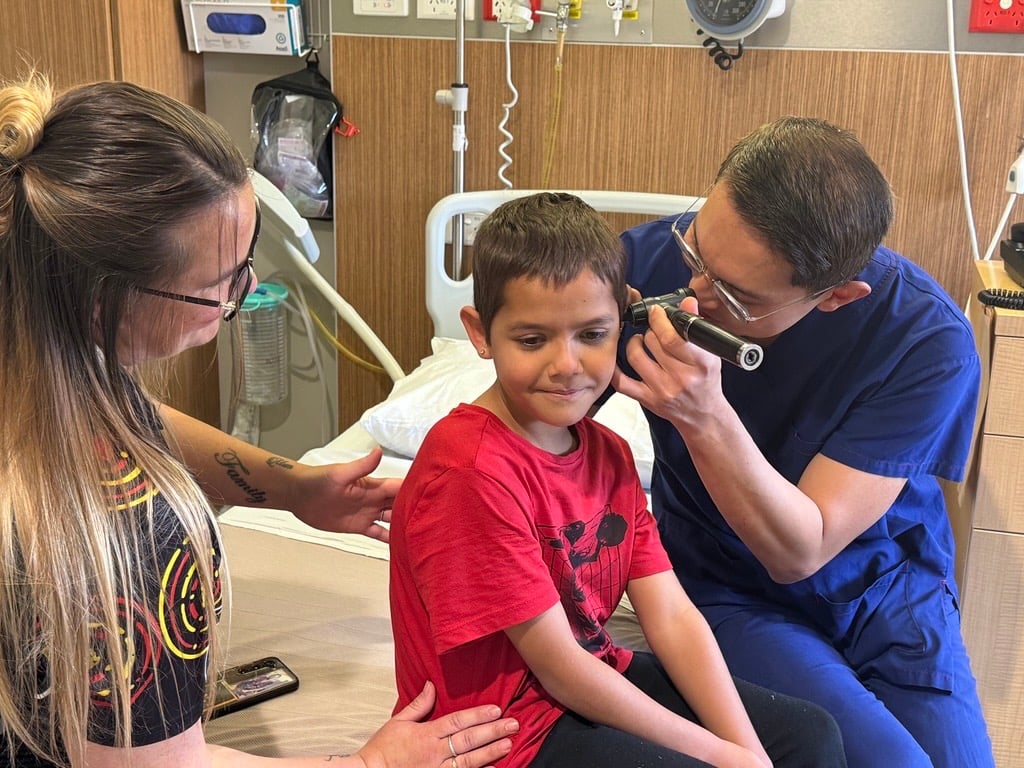
Painful ear infections and muffled sounds are a thing of the past for 100 Aboriginal children who have received free grommet surgery thanks to the Djaalinj Waakinj (listening and hearing) Ear Health program.
To determine whether serum neurofilament light chain (sNfL) levels are suppressed in patients with the clinically isolated syndrome (CIS) following narrowband ultraviolet B phototherapy (UVB-PT).