
Search
Showing results for "clinical trials"
Developmental assessment of infants with fetal growth restriction was mostly comparable to those born without fetal growth restriction at 12 months

Professor Donna Cross and her team at The Kids Research Institute Australia have challenged and overturned damaging attitudes that saw bullying tolerated in childhood.
Repetitive Negative Thinking (RNT) during pregnancy is a key risk factor for psychopathology in the perinatal period. However, the cognitive mechanisms underlying prenatal RNT remain poorly understood. Recent research has suggested that a tendency to volitionally seek negative rather than positive information (i.e., biased information seeking) may contribute to the formation of more negative prenatal expectations, which in turn predict elevated prenatal RNT.
The introduction of universal newborn hearing screening has allowed for early identification and diagnosis of children with severe-profound hearing loss. This study aims to provide the first Western Australian perspective on the surgical feasibility and safety of cochlear implantation before 12 months of age.
Anxiety is a leading mental health concern in childhood. Whilst a range of therapeutic approaches effectively reduce anxiety in young children, several barriers impact their implementation into practice. Digital interventions could help overcome some of these challenges; however, whether these can effectively target anxiety for children with and without Neurodevelopmental Conditions is unknown.
Nirsevimab is a long-acting monoclonal antibody used to prevent respiratory syncytial virus (RSV) infection in infants and high-risk children. During the 2024 RSV season in Western Australia, 21 922 doses were administered to infants entering their first season and 1221 doses to at-risk children. In this context, the selection and spread of escape variants are a potential concern. This study aimed to investigate nirsevimab binding site mutations using clinical and wastewater data.
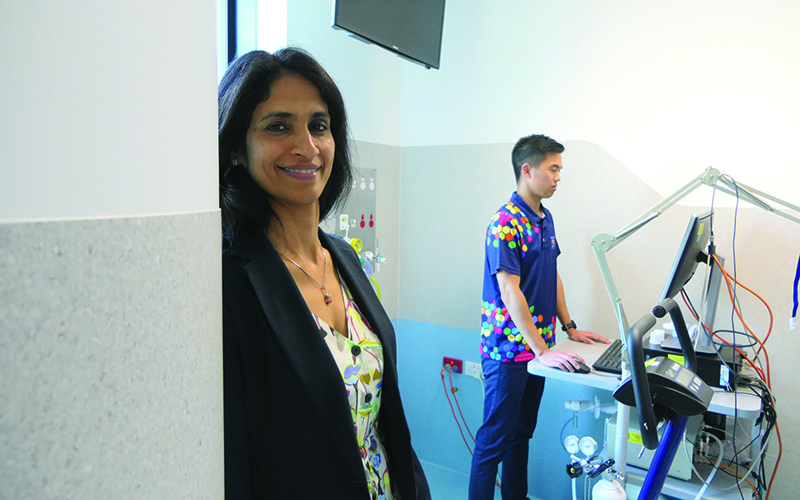
A ground-breaking new app developed by The Kids researchers may soon make exercising safer for young people with type 1 diabetes.

Researchers have worked with communities to come up with a tangible, practical legacy to improve the policy architecture and clinical approaches to drinking during pregnancy

Coconut oil has been used on premature babies to help fight off deadly infections. Researchers are now hoping to prove it is effective for other conditions as well.
The world’s leading preterm scientists and doctors have joined forces to help give babies born very prematurely, the best possible life.