
Search
Showing results for "early childhood"

Global efforts led by The Kids Research Institute Australia’s Child Health Analytics program will see nations impacted by high rates of malaria empowered to develop their own controls and solutions.
Little is known about how or when language and visuospatial processing lateralise in the brain, and if individual differences in lateralisation are related to early language or visuospatial abilities. We explored if patterns of language and visuospatial lateralisation are related to cognitive skills in young children.
This study explores the complex and multifaceted nature of social media use among young adolescents, drawing on the perspectives of young adolescents, parents and experts. It examines both the benefits and risks of social media and associated implications for adolescent mental health, self-development and social relationships.
Britta Regli-von Ungern-Sternberg AM FAHMS MD, PhD, DEAA, FANZA Chair of Paediatric anaesthesia, University of Western Australia; Consultant
Effective social skills are essential for functional social support, help-seeking, and resource access. Digital social skills training plays a key role in empowering individuals to develop social competence, improve access to various support and resources, and enhance locus of control through dynamic media.
Older people with cognitive impairment are unrepresented in clinical research. Our objective was to review evidence for strategies to support their research inclusion and participation.
Urine is an attractive biospecimen for nutritional status and population health surveys. It is an excellent non-invasive alternative to blood for appropriate biomarkers in young children and is suitable for home-based collection, enabling representative collections across a population. However, the bulk of literature in this population is restricted to collection in primary care settings.
Estimate the global prevalence of neurodevelopmental impairment in children with Robin sequence (RS) at one year or more of age.
Britta Regli-von Ungern-Sternberg AM FAHMS MD, PhD, DEAA, FANZA Chair of Paediatric anaesthesia, University of Western Australia; Consultant
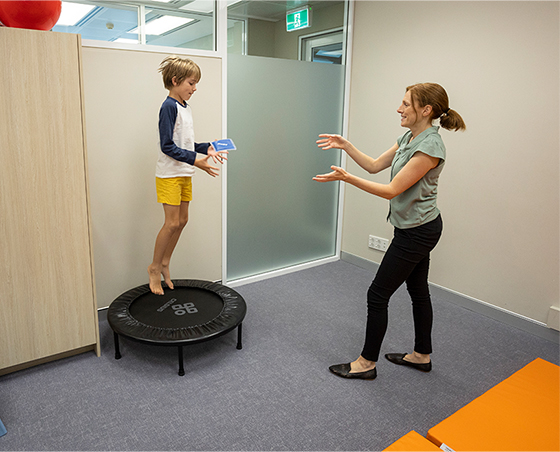
Developmental Coordination Disorder (DCD) is a neurodevelopmental condition that affects a child’s ability to learn and carry out everyday motor skills. An early and accurate assessment helps families and schools understand a child’s unique needs.