
Search
Showing results for "Childhood interstitial lung disease "
With more than one in four Australian children overweight or obese, and the significant risks this poses for health problems like asthma, depression,...
To investigate the long-term effects of early-life recurrent otitis media (OM) and subsequent behavioural problems in children at the age of 10 years.

ORIGINS sub-project, The Flourishing Child, has received a $746,051 grant from the Medical Research Future Fund to develop a Flourishing Assessment and Pathway Tool to address gaps in early intervention for children's mental health.
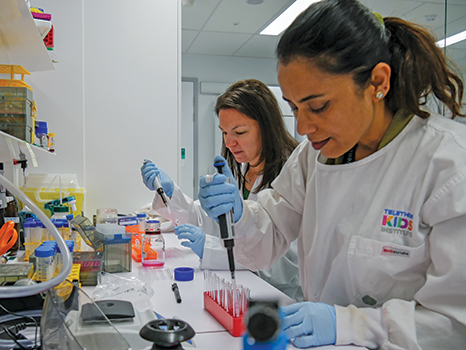
The The Kids Cancer Centre is at the cutting edge of developing new, safer ways of treating children with cancer using their own immune systems.
All alterations to lung mechanics following in utero arsenic exposure were recovered by adulthood.
Rare childhood cancers have not benefited to the same extent from the gains that have been made for their frequently occurring counterparts.

Conditionally reprogrammed primary airway epithelial cells maintain morphology, lineage and disease specific functional characteristics The study of
Early disease surveillance in young children with cystic fibrosis: A qualitative analysis of parent experiences Sensitive measures of early lung
The realisation of human potential for development requires age-specific investment throughout the 8000 days of childhood and adolescence
The airway smooth muscle (ASM) layer thickens during development. Identifying the mechanism(s) for normal structural maturation of the ASM reveals pathways susceptible to disease processes. This study characterized thickening of the ASM layer from foetal life to childhood and elucidated the underlying mechanism in terms of hypertrophy, hyperplasia and extracellular matrix (ECM) deposition.