
Search
Showing results for "early lung health"

Dr Renee Ng, a microbiologist specialising in bacteriophage therapy – an alternative to antibiotics to fight antimicrobial resistance – will travel to the world’s premier conference on viruses, bringing new ideas, connections and expertise back to Perth.
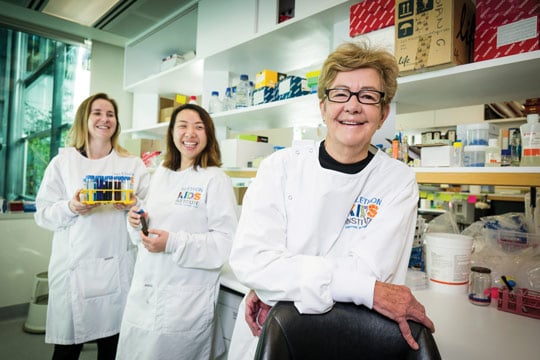
Researchers at The Kids Research Institute Australia are continuing to hone in on the effects of ultraviolet radiation and vitamin D on the immune system.
Dr Andrew Whitehouse from Perth's Telethon Institute for Child Health Research shortlisted as a finalist for the prestigious 2012 Australian Museum Eureka Prize
Leading researchers into the effects of alcohol in pregnancy have thrown their support behind the recommendations of a national Inquiry into FASD.
aboriginal research assistant child health ear
A list of the Children's Diabetes Centre's research track record.
CDKL5 deficiency disorder (CDD) is a rare developmental and epileptic encephalopathy (DEE) associated with multiple impairments and comorbidities. Outcome measures for disease-modifying clinical trials for DEEs should measurably capture a spectrum of caregiver priorities and be externally validated.
The CDKL5 Clinical Severity Assessment is a comprehensive, content-validated measurement tool capturing the diverse challenges of cyclin-dependent kinase-like 5 deficiency disorder, a genetically caused developmental epileptic encephalopathy. The CCSA is divided into clinician-reported and caregiver-reported assessments. The aim of this study was to evaluate the factor structure of these measures through confirmatory factor analysis and evaluate their validity and reliability.
Among the increasing threats to the healthcare of transgender and gender-diverse people globally, are efforts to deny gender-affirming medical care to people under age 25 typically justified by stating that the human brain is not developed until the mid-to-late 20's. Thus, this line of reasoning states young adults are not sufficiently mature to be responsible for autonomous healthcare decision-making— at least in regard to gender-affirming care.
A diagnosis of an autism spectrum condition (autism) provides limited information regarding an individual’s level of functioning, information key in determining support and funding needs.