
Search
Showing results for "Childhood interstitial lung disease "
Australian children aged 5 years and younger are exposed to more screen time (e.g., televisions, tables, and smartphones) than ever before.
Mental health problems are the most prevalent and expensive chronic condition affecting children.

This evaluation explored the facilitators & barriers that influence Community Playgroup attendance, and the impact of attending playgroups on child development.

In this blog, Speech Pathologist Genevieve Wilmot discusses the many benefits of book sharing and how it can promote connection and social and communication development.
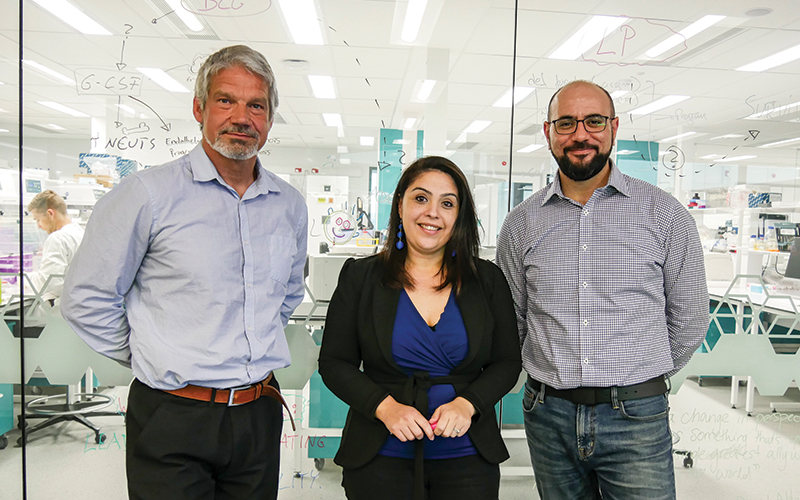
Running any research project is a feat of logistical gymnastics – and often, you don’t know what can go wrong until it happens.
Hereditary pancreatitis causes severe early-onset pain and hospitalisation. In 15 Australian patients undergoing total pancreatectomy and islet auto transplantation (TPIAT), we observed a marked reduction in hospital admissions, inpatient days and emergency visits, complete analgesic cessation by 24 months and durable insulin independence in nearly half of the patients. These findings highlight TPIAT's potential to improve quality of life and reduce healthcare burden. Our programme aims to build evidence to support public funding and ensure equitable access to this procedure.
Globally, Indigenous people, including Aboriginal and Torres Strait Islander people in Australia, experience significantly poorer health outcomes than their non-Indigenous counterparts. In part, this can be attributed to the ongoing impacts of colonization, marginalization, and systemic discrimination. In the genomic healthcare era, Indigenous people remain underrepresented in public genetic health services, raising concerns about cultural competency and inclusivity within the genetic counseling profession.
Aboriginal and Torres Strait Islander communities are diverse, strong and faced with adverse social circumstances and unacceptable health and wellbeing outcomes wrought by colonisation. The need for strengths-based initiatives that tailor services according to local knowledges is well accepted, yet few studies have evaluated self-determined strategies to redress the social determinants of health.
Expression of the compact mitochondrial genome is regulated by nuclear encoded, mitochondrially localized RNA-binding proteins (RBPs). RBPs regulate the lifecycles of mitochondrial RNAs from transcription to degradation by mediating RNA processing, maturation, stability and translation. The Fas-activated serine/threonine kinase (FASTK) family of RBPs has been shown to regulate and fine-tune discrete aspects of mitochondrial gene expression.
This prospective cohort study, which recruited participants with definite ARF in Australia and Aotearoa New Zealand, profiled circulating immune molecules and cells to inform disease mechanisms and future druggable pathways.