
Search
Showing results for "early lung health"

The Kids Research Institute Australia & Menzies School of Health Research will lead an international project to develop a diagnostic tool for acute rheumatic fever.

Expected to shine a light on hidden harm from alcohol use during pregnancy, Australia’s first national FASD diagnostic tool has been developed by the Institute.
Children globally have been profoundly impacted by the coronavirus disease 2019 (COVID-19) pandemic. This review explores the direct and indirect public health impacts of COVID-19 on children. We discuss in detail the transmission dynamics, vaccination strategies and, importantly, the ‘shadow pandemic’, encompassing underappreciated indirect impacts of the pandemic on children.
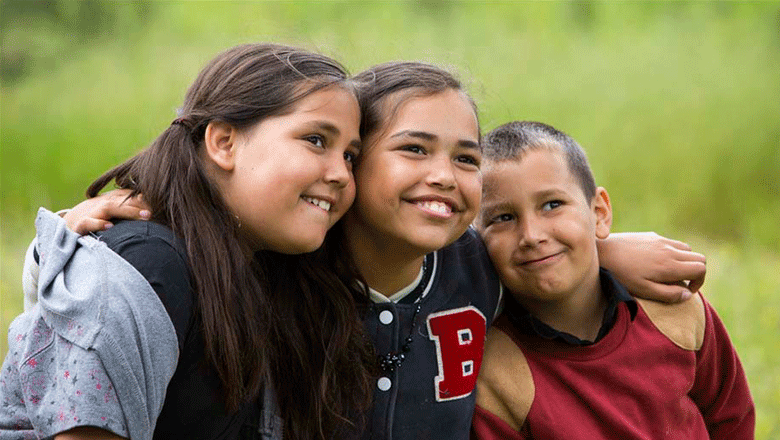
The National Aboriginal and Torres Strait Islander Leadership in Mental Health welcomes funding by the Australian Government
Cancer researchers at The Kids for Child Health Research have developed a new test that can rapidly detect the loss of genes in cancer cells.
The Australian National Healthy Skin Guideline summarises evidence-based treatment of impetigo, scabies and fungal infections in high burden settings
Consumption of a Mediterranean diet (MD) has been associated with reduced incidence of non-communicable diseases and reduced overall mortality, with epigenomic effects representing plausible mediators. The aim of this pilot study was to explore potential epigenetic associations between DNA methylation markers in blood and adherence to an MD in pregnancy.
Acute lower respiratory infections (ALRI) are a major cause of hospitalisation in young children

Submit an Expression of Interest to join the Embrace student application pool for the 2026 Embrace Winter Student Internship Program.
Melissa Gail Matt Jenny Andrew Videos Licari Alvares Cooper Downs Whitehouse Watch and listen to Andrew PhD PhD BCA Marketing, BSc Statistics and