
Search
Showing results for "mental health aboriginal"
This unique and innovative project will be the first to quantify the local food environment around all government and non-government Perth metropolitan primary and secondary schools.
One of the major challenges in health studies with a spatial dimension is to produce valid and meaningful geographical representations of risk.
We know that place, location, and geography can all influence health, wellbeing, and disease, and thus are important factors in policy development and service planning.
Dog ownership has been suggested to be positively associated with children's physical, social, and emotional development. This study investigated the effect of a mobile health dog-facilitated physical activity intervention on young children's social-emotional development and attachment to the family dog.
This review provides a snapshot of some key environmental health issues that will provide ongoing challenges for the Pacific Basin region in the coming decades
Adolescent refugees resettling in Australia are a vulnerable and marginalised population and research to understand their health-care needs remains scarce
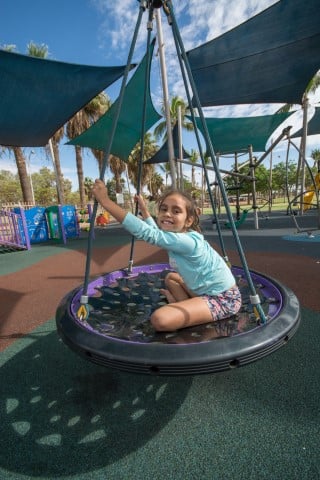
Researchers from The Kids Research Institute Australia are running a school program designed to help children adjust their levels of alertness and attention in class.
There is an urgent need for scalable interventions to promote physical activity in early childhood. An early childhood education and care physical activity policy intervention with implementation support strategies (Play Active) has been proposed for scale-up in Australia.
The Indigenous peoples of Australia have a rich linguistic and cultural history. How this relates to genetic diversity remains largely unknown because of their limited engagement with genomic studies. Here we analyse the genomes of 159 individuals from four remote Indigenous communities, including people who speak a language (Tiwi) not from the most widespread family (Pama-Nyungan). This large collection of Indigenous Australian genomes was made possible by careful community engagement and consultation.
Thank you to our Sponsors Contact us If you'd like to get in touch, please contact Marie Nadal-Sims by phone or email. Phone: (08) 6319 1001 Email: