
Search
Showing results for "mental health aboriginal"
Citation: Reid A, Bowen AC, Brennan-Jones CG, Kuthubutheen JB. Congenital cytomegalovirus: the case for targeted infant screening in Australia. Med J
Protracted international conflict has seen escalating numbers of displaced and resettled Syrian and Iraqi refugees, raising concerns for their health and well-being. This paper describes the demographic and clinical profiles of recently resettled Syrian and Iraqi refugee children and adolescents across physical, psychosocial, developmental and educational domains using standardised multidisciplinary assessments.
Benchmarking and monitoring of urban design and transport features is crucial to achieving local and international health and sustainability goals. However, most urban indicator frameworks use coarse spatial scales that either only allow between-city comparisons, or require expensive, technical, local spatial analyses for within-city comparisons.
Citation: Giles-Corti B, Moudon AV, Lowe M, Adlakha D, et al.. Creating healthy and sustainable cities: what gets measured, gets done. Lancet Global
In addition to being a source of nutrients for the developing newborn, human milk contains thousands of bioactive compounds, which influence infant health in the short-term as exemplified by its major benefits on infectious disease prevention. Many of the human milk compounds also have the required characteristics to instruct immune development and guide long-term health.
The objectives of this study are to assess the association between childhood bullying and preference-based health-related quality of life in Australian school children and their parents and estimate quality-adjusted life years associated with bullying chronicity. Children aged 8-10 years completed the child health utilities, while parents completed the Australian quality of life.
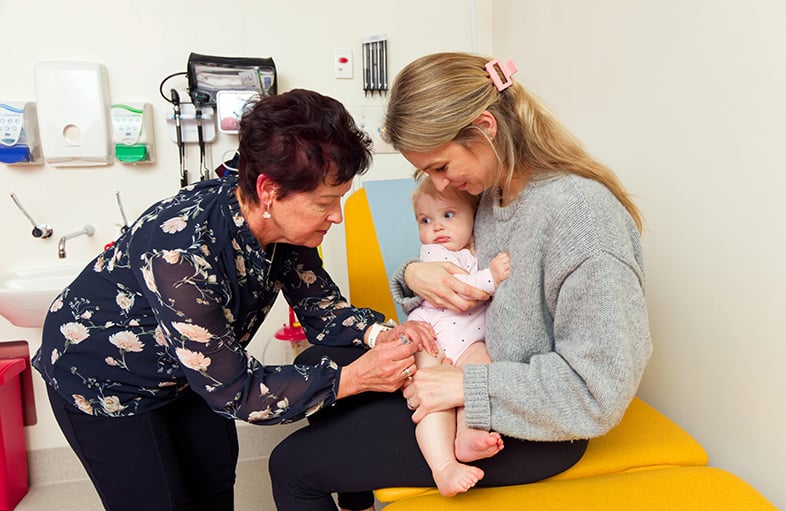
Aims to prevent, diagnose, and treat infectious diseases, with a strong focus on developing effective vaccines and improving immunity across populations. This theme addresses both emerging and persistent infections that impact children's health worldwide.
Adolescent refugees resettling in Australia are a vulnerable and marginalised population and research to understand their health-care needs remains scarce
This review provides a snapshot of some key environmental health issues that will provide ongoing challenges for the Pacific Basin region in the coming decades
Natural outdoor environments provide important settings for children to engage in physical activity. It is unclear if these relationships also exist in preschool aged children. We examined associations between amount and type of neighbourhood vegetation and blue space, proximity to the beach and preschooler's device-measured movement behaviours.