
Search
Showing results for "early childhood"
Epidemiological evidence from the past decade suggests a role of vitamin D in food allergy pathogenesis
The Global Lung Function Initiative (GLI) Network has become the largest resource for reference values for routine lung function testing ever assembled.
Our results reveal long-lasting changes to progenitor cells of monocytes/macrophages by a 2-hour dimethyl PGE2 pulse that, in turn, limits the migration of their daughter cells to chemoattractants and inflammatory mediators.
In this article, the Group Chairs of the Paediatric Assembly of the European Respiratory Society (ERS) highlight some of the most interesting abstracts presented at the 2016 ERS International Congress, which was held in London.
Highlight of some of the most interesting abstracts presented at the 2016 ERS International Congress, which was held in London
Almost of 10% of children with FASD has significant motor impairment. Evaluation of motor function should routinely be included in assessments for FASD.
Biological changes associated with T-ALL relapse and resistance are stochastic and highly individual
This report provides new insight into the functional specialization within the broad network of dendritic cells that are responsible for skin immunosurveillance
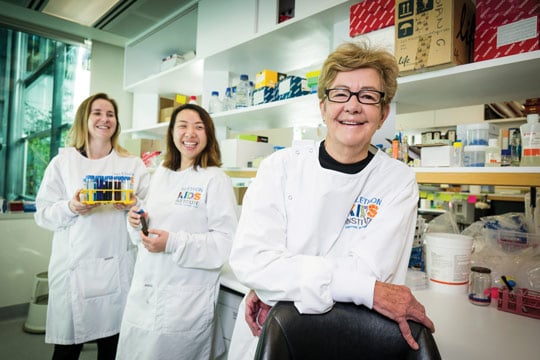
Researchers at The Kids Research Institute Australia are continuing to hone in on the effects of ultraviolet radiation and vitamin D on the immune system.

Four leading The Kids Research Institute Australia researchers have been awarded Fellowships from the National Health and Medical Research Council (NHMRC).