
Search
Showing results for "Childhood interstitial lung disease "
Culturally unsafe mental health services contribute to persistent inequities for Aboriginal and Torres Strait Islander peoples, yet existing cultural safety frameworks lack clear, prioritised, community-endorsed implementation guidance. This study aimed to establish Aboriginal consensus on cultural safety principles, implementation priorities and practical actions for culturally safe mental health services.
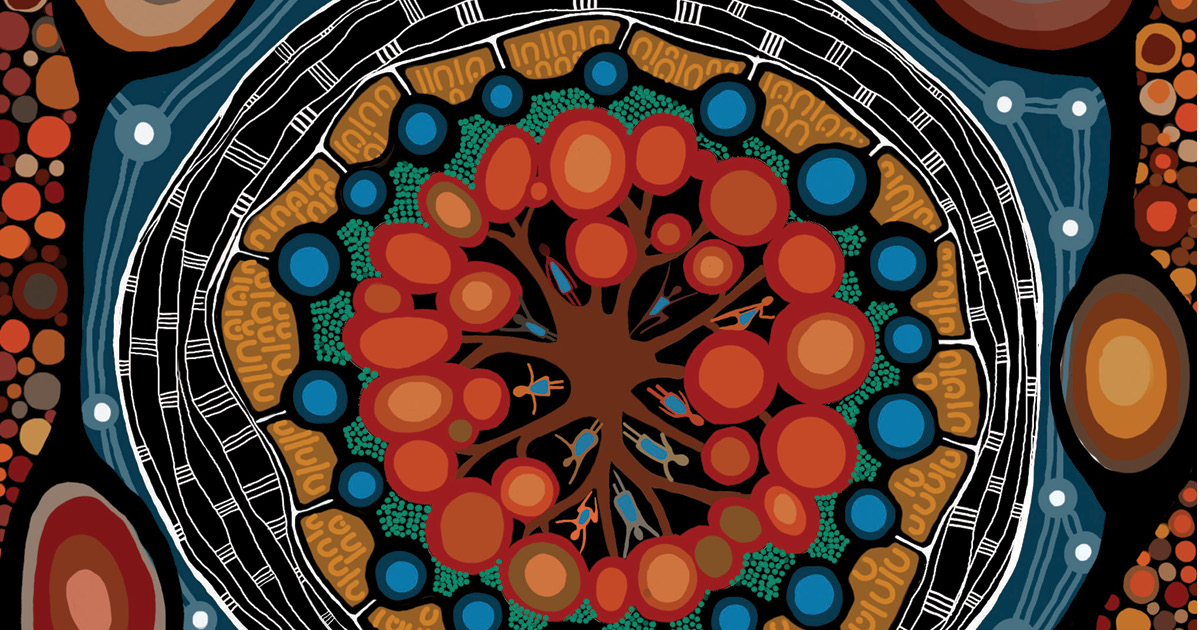
Life imitates art in a new project that seeks to entrench cultural safety for young Aboriginal and Torres Strait Islander people into WA’s mental health system.
To examine the longitudinal effects of dog ownership and dog walking on self-reported and objective measures of physical function in mid- to older-aged adults.
The aim of this study was to test the hypothesis that exercise in cool water results in a greater decrease in blood glucose concentration than in thermoneutral water or on land in individuals with type 1 diabetes.
Dog ownership is a potential strategy for maintaining physical activity levels and supporting healthy aging. This study examined longitudinal effects of dog ownership and dog walking on physical activity and mental health in mid-to-older aged adults.
The majority of Australian children exceed the World Health Organization's recommended dietary intake of free sugar, particularly through the consumption of sugar-sweetened beverages. Front-of-pack nutrition labels increase perceived risk and deter the consumption of sugar-sweetened beverages.
Neonatal retrieval networks have adopted time-centric quality metrics as Key Performance Indicators (KPI) for setting and comparing benchmarking standards. Quicker launch time (departure from base), an essential KPI, enables neonatal retrieval teams to rapidly provide higher-level care to sick infants. The Newborn Emergency Transport Services of Western Australia (NETS WA) facilitates neonatal transfers across largest global retrieval area necessitating quicker team launch times for urgent retrievals. NETS WA conducted a quality improvement (QI) study to quicken team launch times for urgent retrievals.
Eye-tracking could expedite autism identification/diagnosis through standardisation and objectivity. We tested whether Gazefinder autism assessment, with Classification Algorithm derived from gaze fixation durations, would have good accuracy (area under the curve [AUC] ≥ 0.80) to differentiate 2-4-year-old autistic from non-autistic children.
Family Day Care (FDC) is an essential service supporting Australian families requiring convenient, versatile, and quality education and care for their children. FDC educators’ mental wellbeing (MWB), often overlooked, is vital to ensure optimal education and care. This study aimed to gauge Australian FDC educators’ MWB and identify factors positively or negatively affecting MWB.
Over the last two decades, transcriptomics has become a standard technique in biomedical research. We now have large databases of RNA-seq data, accompanied by valuable metadata detailing scientific objectives and the experimental procedures used. The metadata is crucial in understanding and replicating published studies, but so far has been underutilized in helping researchers to discover existing datasets.