
Search
Showing results for "early lung health"
Christopher Asha Blyth Bowen MBBS (Hons) DCH FRACP FRCPA PhD BA MBBS DCH FRACP PhD GAICD FAHMS OAM Centre Head, Wesfarmers Centre of Vaccines and

Professor Jonathan Carapetis AM, has been recognised as an outstanding member of the Greek diaspora in Australia for his longstanding excellence and leadership within the health and medical research sector.

Year 7 is a time of big change and challenges - and it's also the best time to start talking about alcohol.
Diabetes distress, self-efficacy and health literacy are associated with diabetes self-management and health outcomes. Measures of coping styles and their impact on diabetes self-management and diabetes-related distress may add value in identifying those at risk of poorer health outcomes. Current evidence of associations between psychological flexibility/inflexibility and diabetes related health outcomes is limited.
Asthma is the commonest medical cause for hospital admission for children in Australia, affects more than 300 million people worldwide, and is incurable...
High-frequency oscillatory ventilation (HFOV) is an established mode of respiratory support in the neonatal intensive care unit. Large clinical trial data is based on first intention use in preterm infants with acute respiratory distress syndrome. Clinical practice has evolved from this narrow population. HFOV is most often reserved for term and preterm infants with severe, and often complex, respiratory failure not responding to conventional modalities of respiratory support.
High-frequency oscillatory ventilation (HFOV) is an established mode of respiratory support in the neonatal intensive care unit. Large clinical trial data is based on first intention use in preterm infants with acute respiratory distress syndrome. Clinical practice has evolved from this narrow population. HFOV is most often reserved for term and preterm infants with severe, and often complex, respiratory failure not responding to conventional modalities of respiratory support.
Bronchopulmonary dysplasia (BPD) remains the most common complication of preterm birth with lifelong consequences. Multiple BPD definitions are currently used in daily practice. Uniformity in defining BPD is important for clinical care, research and benchmarking. The aim of this Delphi procedure is to determine what clinicians and researchers consider the key features for defining BPD.
Age-specific definitions for acute respiratory distress syndrome (ARDS) are available, including a specific definition for neonates (the "Montreux definition"). The epidemiology of neonatal ARDS is unknown. The objective of this study was to describe the epidemiology, clinical course, treatment, and outcomes of neonatal ARDS.
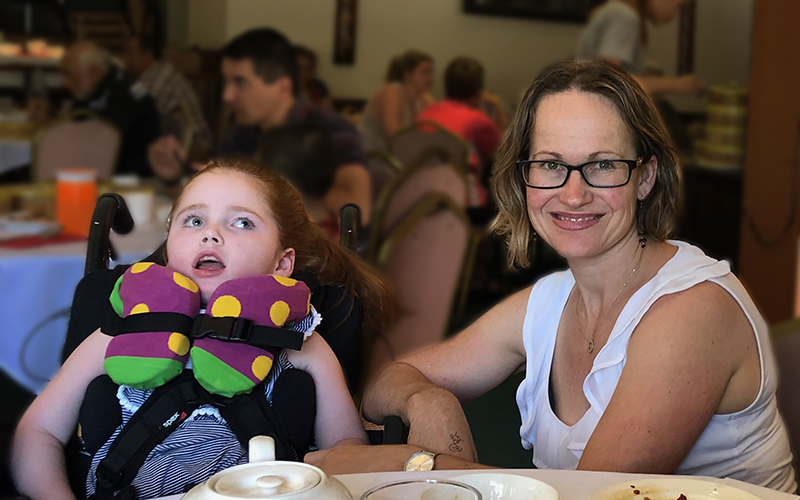
Children with intellectual disability who underwent gastrostomy – a feeding tube placed into the stomach – had better overall health and fewer hospitalisations for all causes except acute respiratory illnesses, research led by The Kids Research Institute Australia has found.