
Search
Showing results for "early childhood"
A recent study from The Kids Research Institute Australia has revealed some interesting facts about just how important those school attendance days are.

New dads can feel undervalued and face significant health and mental health risks following the birth of a child, according to new research that has prompted a rethink about how to address the often-unmet needs of fathers.

The FASD Research Australia Centre of Research Excellence (CRE) has substantially built the evidence base around FASD and had a significant impact on advocacy, policy and practice.
The declining mental health of youth in late adolescence and early adulthood represents a serious public health concern, resulting in substantial symptom burden, mortality, and societal cost. Despite this, youth with clinical mental illnesses show poor engagement with mental health services.
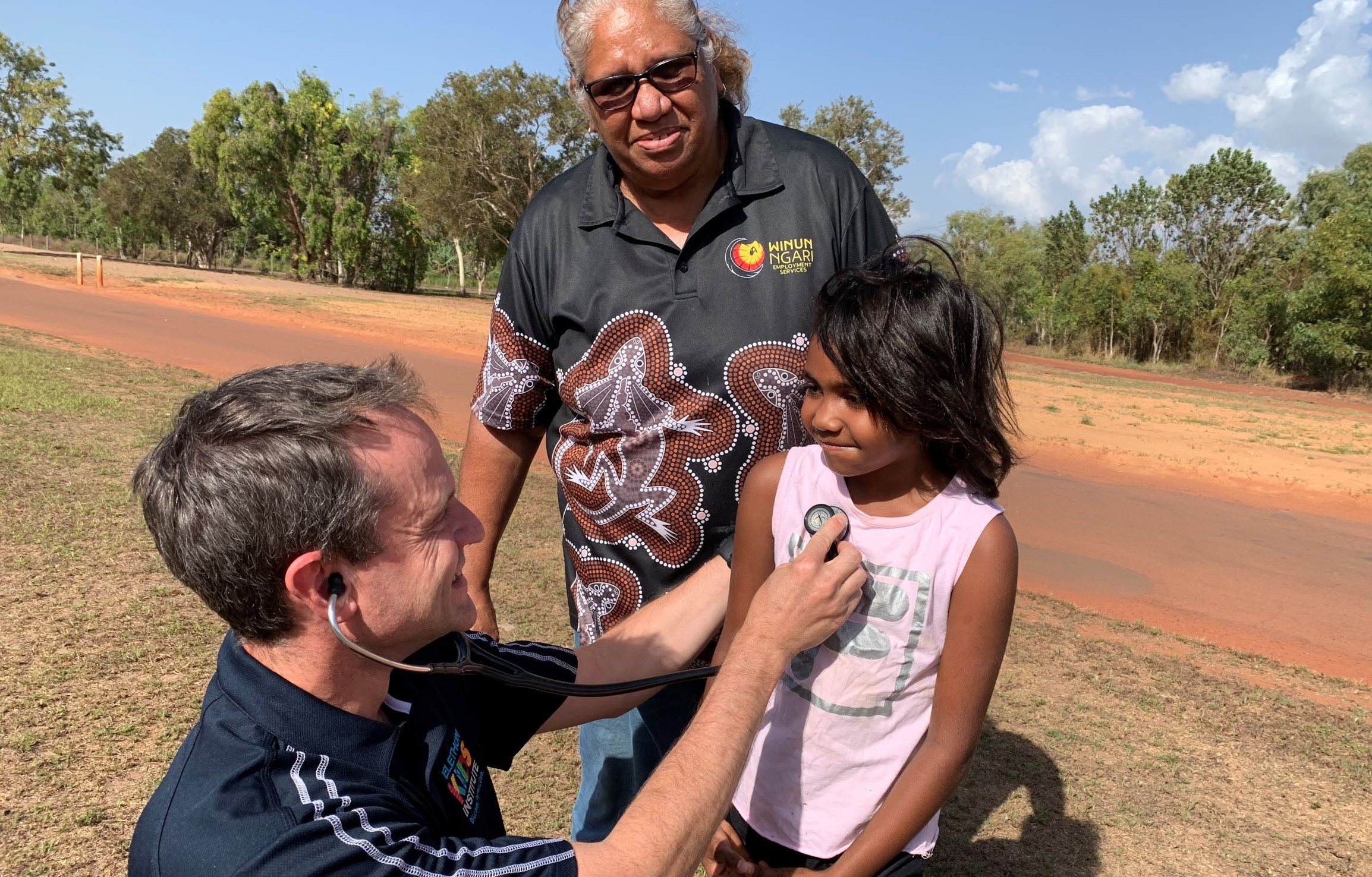
Results from a world first-study measuring prevalence of chronic wet cough and protracted bacterial bronchitis in four Kimberley Aboriginal communities have highlighted the enormity of the health problem.
In Australia, accurate case ascertainment of acute rheumatic fever (ARF) and rheumatic heart disease (RHD) diagnoses for disease surveillance and control purposes requires the use of multiple data sources, including RHD registers and hospitalisation records. Despite drawing on multiple data sources, the true burden of ARF/RHD is likely to be underestimated.
Multiple breath washout is a lung function test based on tidal breathing that assesses lung volume and ventilation distribution. The aim of this analysis was to use the Global Lung Function Initiative methodology to develop all-age reference equations for the multiple breath washout indices lung clearance index and functional residual capacity.
Accurate knowledge of the relationship between craniofacial anomalies (CFA), intellectual disability (ID) and autism spectrum disorder (ASD) is essential to improve services and outcomes. The aim is to describe the association between CFA, ID and ASD using linked population data.
Prenatal alcohol exposure is associated with a range of adverse offspring neurodevelopmental outcomes. Several studies suggest that PAE modifies DNA methylation in offspring cells and tissues, providing evidence for a potential mechanistic link to Fetal Alcohol Spectrum Disorder.
Cranial radiation therapy is essential in treating many pediatric cancers, especially brain tumors; however, its use comes with the risk of developing second malignancies. Cranial radiation-induced gliomas (RIGs) are aggressive high-grade tumors with a dismal prognosis, for which no standard therapy exists. A definitive molecular signature for RIGs has not yet been established. We sought to address this gap by performing a systematic review and meta-analysis of the molecular features of cranial RIGs.