
Search
Showing results for "Childhood interstitial lung disease "
Christopher Blyth MBBS (Hons) DCH FRACP FRCPA PhD Centre Head, Wesfarmers Centre of Vaccines and Infectious Diseases; Co-Head, Infectious Diseases
Recurrences of herpes simplex virus (HSV) in the orofacial region (herpes labialis or cold sores) impact quality-of-life. We aimed to study whether the bacille Calmette-Guérin (BCG) vaccine can attenuate cold sore recurrences through off-target immunomodulatory effects.
The abstract screening process of systematic reviews can take thousands of hours by two researchers. We aim to determine the reliability and validity of Research Screener, a semi-automated abstract screening tool within a systematic review on non-specific and broader effects of respiratory vaccines on acute lower respiratory infection hospitalisations and antimicrobial prescribing patterns in young children.
Bacille Calmette-Guérin (BCG) vaccination has off-target (non-specific) effects that are associated with protection against unrelated infections and decreased all-cause mortality in infants. We aimed to determine whether BCG vaccination prevents febrile and respiratory infections in adults.
Continuous glucose monitoring (CGM) can detect early dysglycemia in older children and adults with presymptomatic type 1 diabetes and predict risk of progression to clinical onset. However, CGM data for very young children at greatest risk of disease progression are lacking.
Reliable and detailed data on the prevalence of tuberculosis (TB) with sub-national estimates are scarce in Ethiopia. We address this knowledge gap by spatially predicting the national, sub-national and local prevalence of TB, and identifying drivers of TB prevalence across the country.
When investigating whether a variant identified by diagnostic genetic testing is causal for disease, applied genetics professionals evaluate all available evidence to assign a clinical classification. Functional assays of higher and higher throughput are increasingly being generated and, when appropriate, can provide strong functional evidence for or against pathogenicity in variant classification. Despite functional assay data representing unprecedented value for genomic diagnostics, challenges remain around the application of functional evidence in variant curation.
Scabies infection is associated with heightened total IgE immunoglobulin and IgE antibodies to scabies antigens, with both being extremely high for crusted scabies patients. The IgE antibodies cross-react with house dust mite allergens with high reactivity found to the minor allergen arginine kinase.
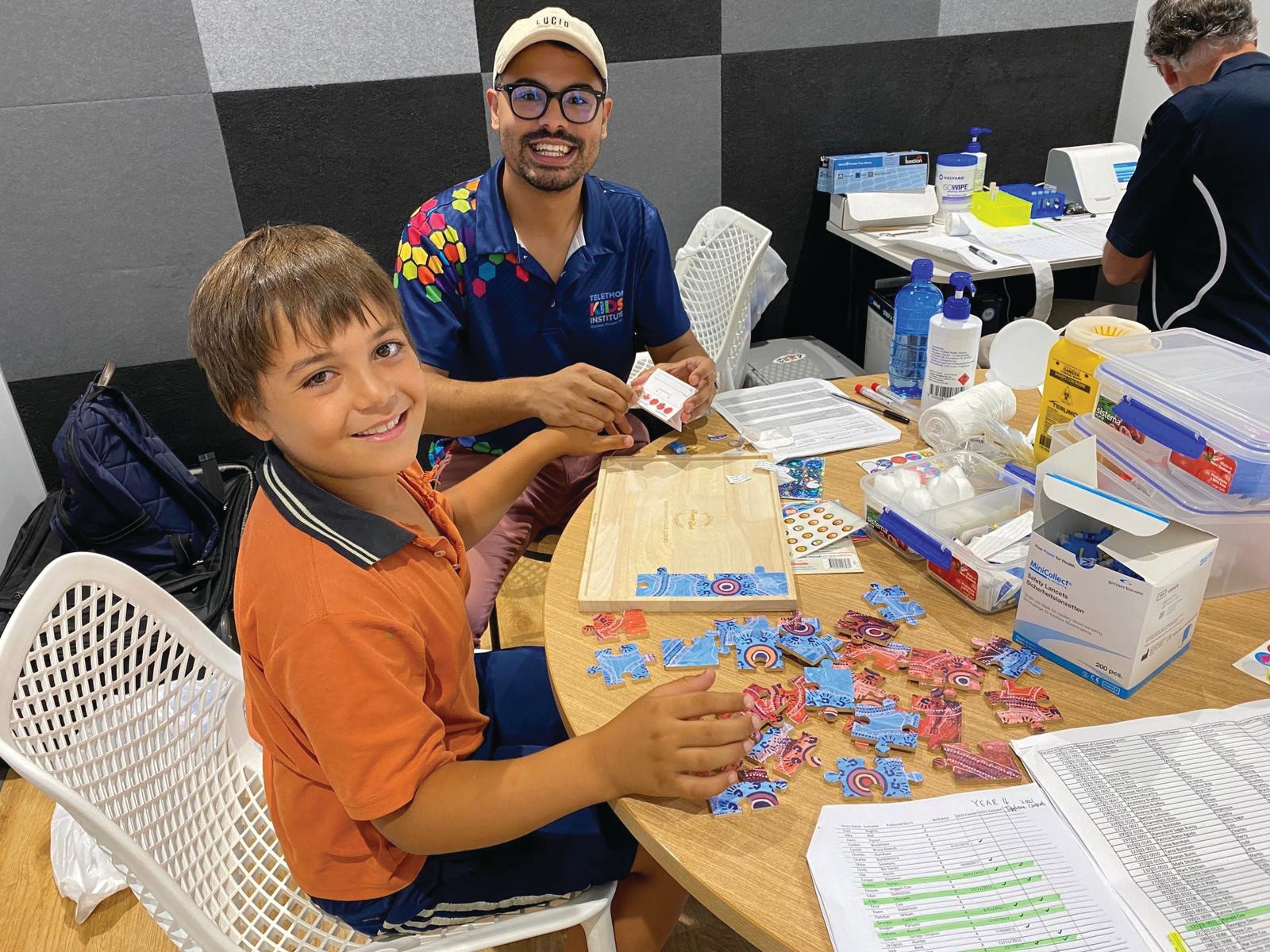
Thanks to research, a six -second test can get the answers that could save a child’s life.
Non-coercive 'nudge' interventions have shown the potential to promote health behaviours. This study aimed to evaluate the impact of nudge interventions on COVID-19/influenza vaccine uptake among children with medically at-risk conditions.