
Search
Showing results for "early lung health"

The C3 Study is an exploration into best practice around co-research with youth consumers being led by the Adolescent Health and Wellbeing Team at The Kids Research Institute Australia, who are based in Adelaide.
There is now considerable evidence demonstrating that both prenatal and postnatal exposure to particular classes of microbial stimuli can provide beneficial signals during early life immune development, resulting in the protection against future inflammatory disease.
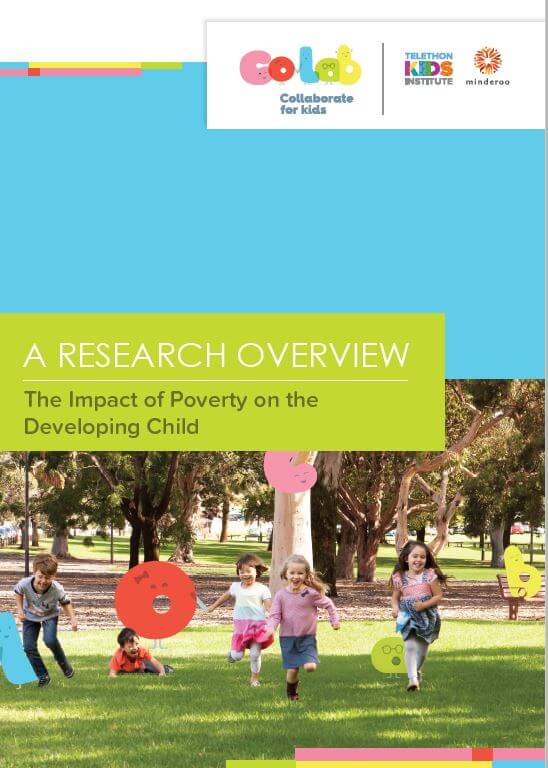
Early childhood is increasingly recognised as a critical time for the development of executive function.
Aboriginal children and children from lower socio-economic backgrounds were over-represented with OM-related hospitalizations but had fewer TTIs

Aboriginal Research Assistant
The Australian and New Zealand Paediatric Infectious Diseases (ANZPID) Group of the Australasian Society for Infectious Diseases (ASID) calls for urgent consideration of the needs and voices of children in response to the COVID-19 pandemic, and in planning for future pandemics.
The epidemiology of invasive meningococcal disease has changed over the last decade and there has been an increase in cases caused by serogroup W135, particularly in Indigenous children. Extra‐meningeal and atypical presentations are associated with serogroup W and may delay diagnosis and therefore appropriate treatment. Public and clinician awareness are essential in facilitating effective new vaccine schedule implementation.
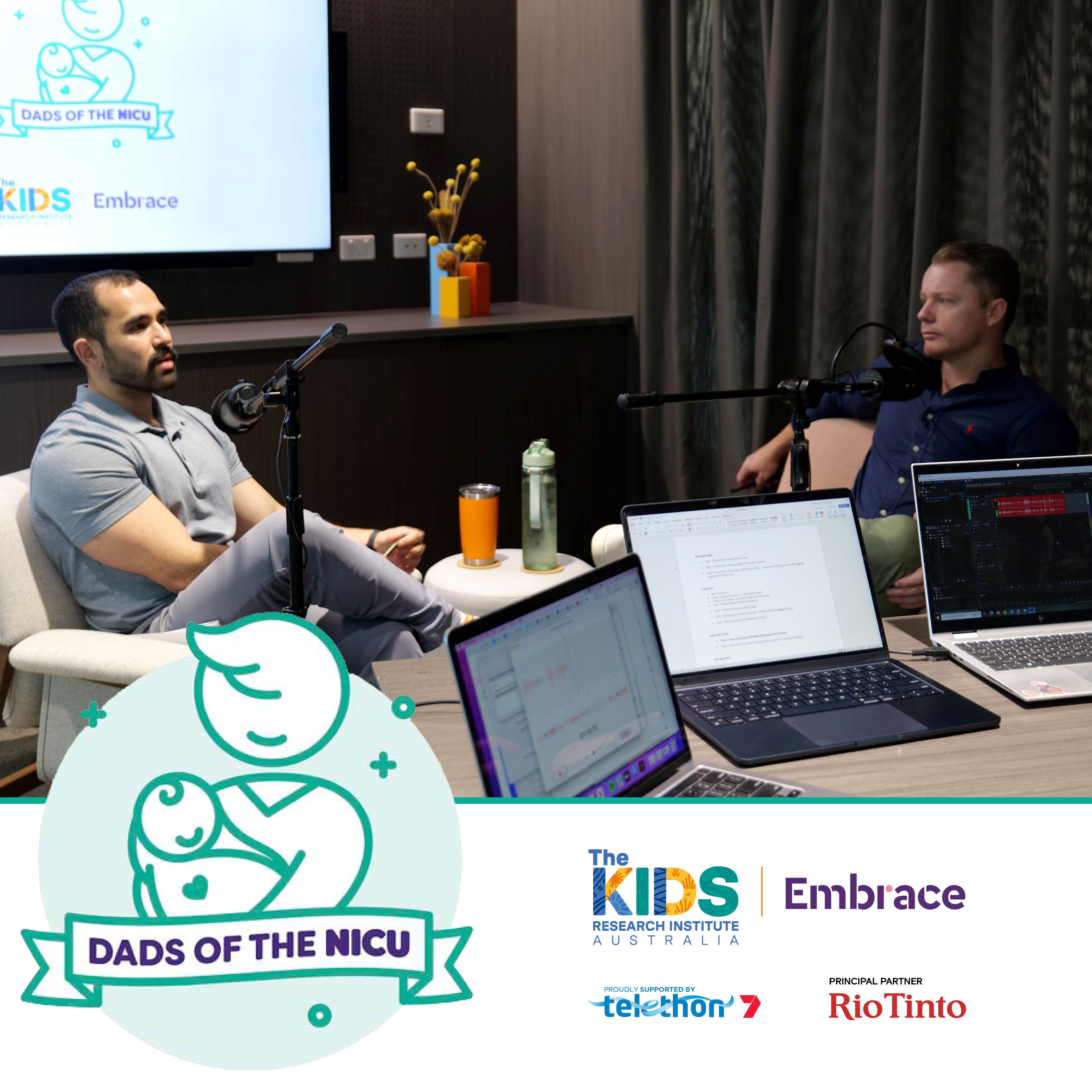
Dr Vincent Mancini interviewed by Dads of the NICU host Matt Bialkowski.

In this The Kids Research Institute Australia subsite, our Rett syndrome research team manages a national and international database of Rett syndrome.
The ESCALATION system is a novel paediatric Early Warning System that incorporates family involvement and sepsis recognition. This study aimed to assess the feasibility and iteratively refine the ESCALATION system in a variety of hospital settings in preparation for full-service implementation.