
Search
Showing results for "mental health aboriginal"
The aim of this study was to identify health professionals' perceptions about screening for fetal alcohol spectrum disorders (FASD) in Australia.

National research led by the Wesfarmers Centre of Vaccines and Infectious Diseases, based at The Kids Research Institute Australia, has secured more than $3.4 million to assess the epidemiology of respiratory syncytial virus (RSV) throughout the country and optimise Australia’s immunisation strategy.
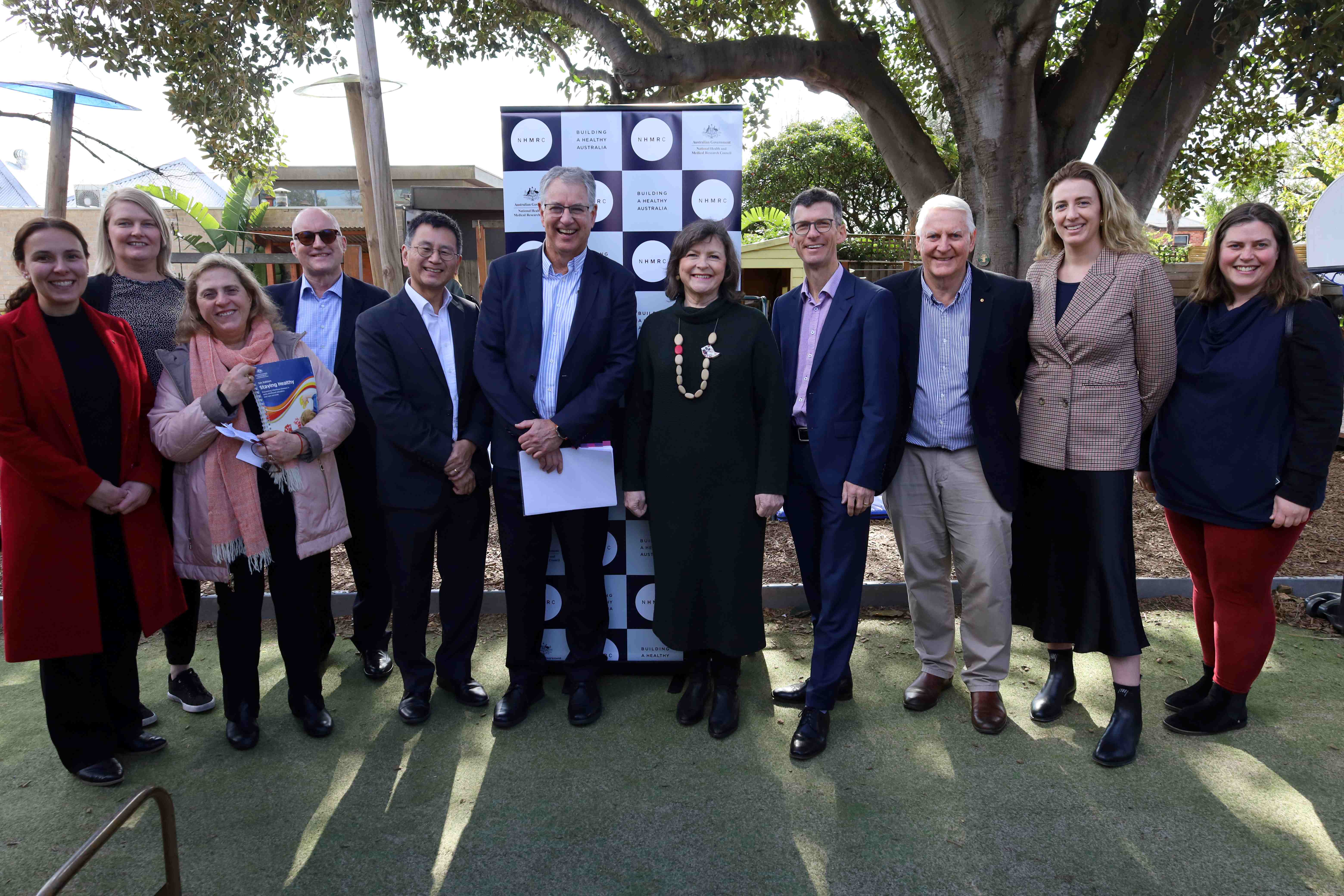
The National Health and Medical Research Council (NHMRC) has launched their sixth edition of Staying healthy: Preventing infectious diseases in early childhood education and care services in a bid to tackle the transmission of germs amongst young kids.

Congratulations to Associate Professor Rebecca Glauert, Head of the Developmental Pathways and Social Policy Team at The Kids Research Institute Australia and an internationally recognised expert in data linkage.

Following strong evidence and lobbying by The Kids Research Institute Australia researchers and others, labels to warn women about the risks of drinking during pregnancy are to become mandatory on all alcohol sold in Australia and New Zealand.

The hearts of everyone at The Kids go out to the family and friends of Lachlan Hernaman, a long-term participant in lung health research who died suddenly on April 30.
Biodiesel usage is increasing steadily worldwide as the push for renewable fuel sources increases. The increased oxygen content in biodiesel fuel is believed to cause decreased particulate matter (PM) and increased nitrous oxides within its exhaust.
Viral haemorrhagic fevers (VHF) cause significant economic and public health impact in Sub-Saharan Africa. Community knowledge, awareness and practices regarding such outbreaks play a pivotal role in their management and prevention. This study was carried out to assess community knowledge, attitude and practices regarding VHF in five geo-ecological zones in Tanzania.
Multiple lifestyle risk factors exhibit a stronger association with non-communicable diseases (NCDs) compared to a single factor, emphasizing the necessity of considering them collectively. By integrating these major lifestyle risk factors, we can identify individuals with an overall unhealthy lifestyle, which facilitates the provision of targeted interventions for those at significant risk of NCDs. The aim of this study was to evaluate the socio-demographic correlates of unhealthy lifestyles among adolescents and adults in Ethiopia.
Climatic conditions are a key determinant of malaria transmission intensity, through their impacts on both the parasite and its mosquito vectors. Mathematical models relating climatic conditions to malaria transmission can be used to develop spatial maps of climatic suitability for malaria. These maps underpin efforts to quantify the distribution and burden of malaria in humans, enabling improved monitoring and control.