
Search
Showing results for "early lung health"
The aim of this study was to compare dental hospital admissions in a total state birth population of Indigenous and non-Indigenous children aged under five...
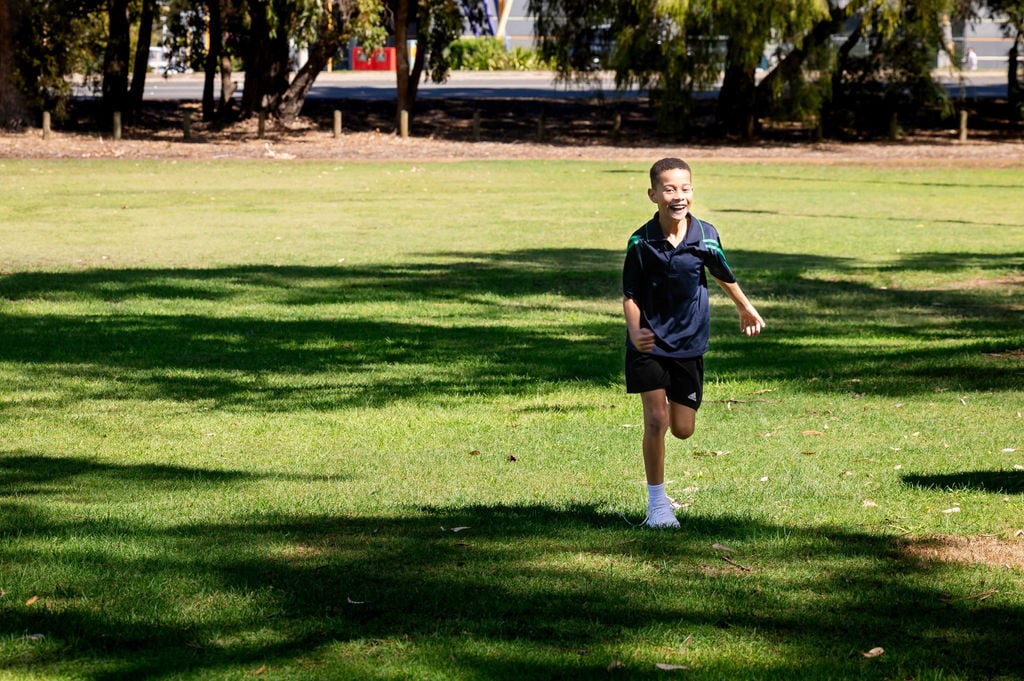
During our 8-Year Kids Checks, ORIGINS is introducing the opportunity for parents and children to be fitted with the SENS motion device which that will measure you and your child's sleep and physical activity for seven days.
Respiratory Syncytial Virus (RSV) causes a significant burden of illness for children under 2 years of age. Nirsevimab, a long-acting monoclonal antibody, was registered for RSV prevention in Australia in 2023. In April 2024, Western Australia (WA) launched the country's first state-wide nirsevimab program for all infants and high-risk children entering their second RSV season.
Recent research showed that precision medicine can identify new treatment strategies for patients with childhood cancers. However, it is unclear which patients will benefit most from precision-guided treatment.
Respiratory syncytial virus (RSV) reinfection in children is poorly understood. We examined the incidence, characteristics, and outcomes of hospital-attended RSV reinfections in children <16 years in Western Australia between 2012 and 2022.
Respiratory syncytial virus (RSV) remains a leading cause of mortality and morbidity worldwide. RSV seasonality was disrupted by COVID-19-associated nonpharmaceutical interventions (NPIs). We review RSV seasonality, molecular epidemiology, clinical manifestations, and community awareness to inform future prevention strategies.
A broad range of interests characterized by unusual content and/or intensity, labeled as circumscribed interests are a core diagnostic feature of autism. Recent evidence suggests that a distinction can be drawn between interests that, although characterized by unusually high intensity and/or inflexibility, are otherwise common in terms of their content (e.g., an interest in movies or animals), labeled as restricted interests and interests that are generally not salient outside of autism (e.g., an interest in traffic lights or categorization), labeled as unusual interests.

Aboriginal Research Assistant
The Australian and New Zealand Paediatric Infectious Diseases (ANZPID) Group of the Australasian Society for Infectious Diseases (ASID) calls for urgent consideration of the needs and voices of children in response to the COVID-19 pandemic, and in planning for future pandemics.
The epidemiology of invasive meningococcal disease has changed over the last decade and there has been an increase in cases caused by serogroup W135, particularly in Indigenous children. Extra‐meningeal and atypical presentations are associated with serogroup W and may delay diagnosis and therefore appropriate treatment. Public and clinician awareness are essential in facilitating effective new vaccine schedule implementation.