
Search
Showing results for "early lung health"
Researchers from The Kids Research Institute Australia are joining forces with international experts in acute rheumatic fever (ARF) and rheumatic heart disease (RHD) to transform the diagnosis of these diseases thanks to an $US8 million grant from the Leducq Foundation.
The internet is emerging as a valuable tool for scientists to gather data for critical research into rare diseases.

During our 8-Year Kids Checks, ORIGINS is introducing the opportunity for parents and children to be fitted with the SENS motion device which that will measure you and your child's sleep and physical activity for seven days.
Understanding the geospatial distribution of influenza infection and the risk factors associated with infection clustering can inform targeted preventive interventions. We conducted a geospatial analysis to investigate the spatial patterns and identify drivers of medically attended influenza infection across all age groups in Western Australia.
Risk factors for non-communicable diseases (NCDs, cardiovascular diseases, cancers, chronic respiratory diseases, diabetes, and mental disorders) arise in adolescence but are mostly framed as relevant to health in adulthood; little is known about the relationship between co-occurring NCD risks and mental wellbeing in young people.
Ependymomas (EPN) are the third most common malignant brain cancer in children. Treatment strategies for pediatric EPN have remained unchanged over recent decades, with 10-year survival rates stagnating at just 67% for children aged 0-14 years. Moreover, a proportion of patients who survive treatment often suffer long-term neurological side effects as a result of therapy. It is evident that there is a need for safer, more effective treatments for pediatric EPN patients.
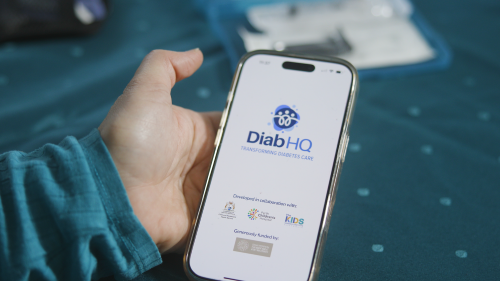
Following the successful launch of the DiabHQ mobile app last November, we're now moving into the exciting next phase and need your voice.
Staphylococcus aureus is a common cause of bacteremia, yet the epidemiology and predictors of poor outcome remain inadequately defined in childhood. ISAIAH (Invasive Staphylococcus aureus Infections and Hospitalizations in children) is a prospective, cross-sectional study of S. aureus bacteremia in children hospitalized in Australia and New Zealand over 24 months.
When author Maurice Sendak first sketched out the story of a rambunctious little boy sent to his room without supper, there’s no way he could have known his rollercoaster tale of childhood imagination would still be speaking to the hearts of wild young things more than six decades on.
A comprehensive understanding of specific factors contributing to variability in responsiveness of children with autism to interventions is paramount for making evidence-based clinical and policy decisions. This meta-analysis examined child and family characteristics, as well as intervention design factors, associated with outcomes of behavioral interventions for children with autism.