
Search
Showing results for "early childhood"
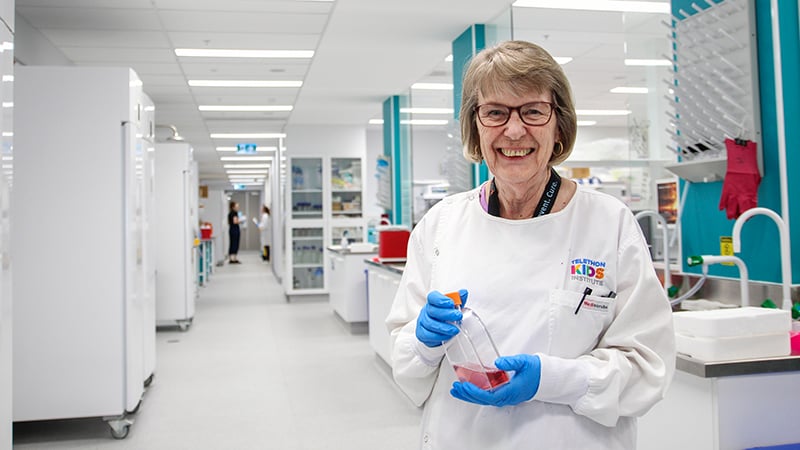
The Institute farewelled one of its most treasured employees this year, as The Kids Cancer Centre research officer Jette Ford closed the door on a quietly stellar 37-year career which has helped to change the face of cancer research in WA and around the world.
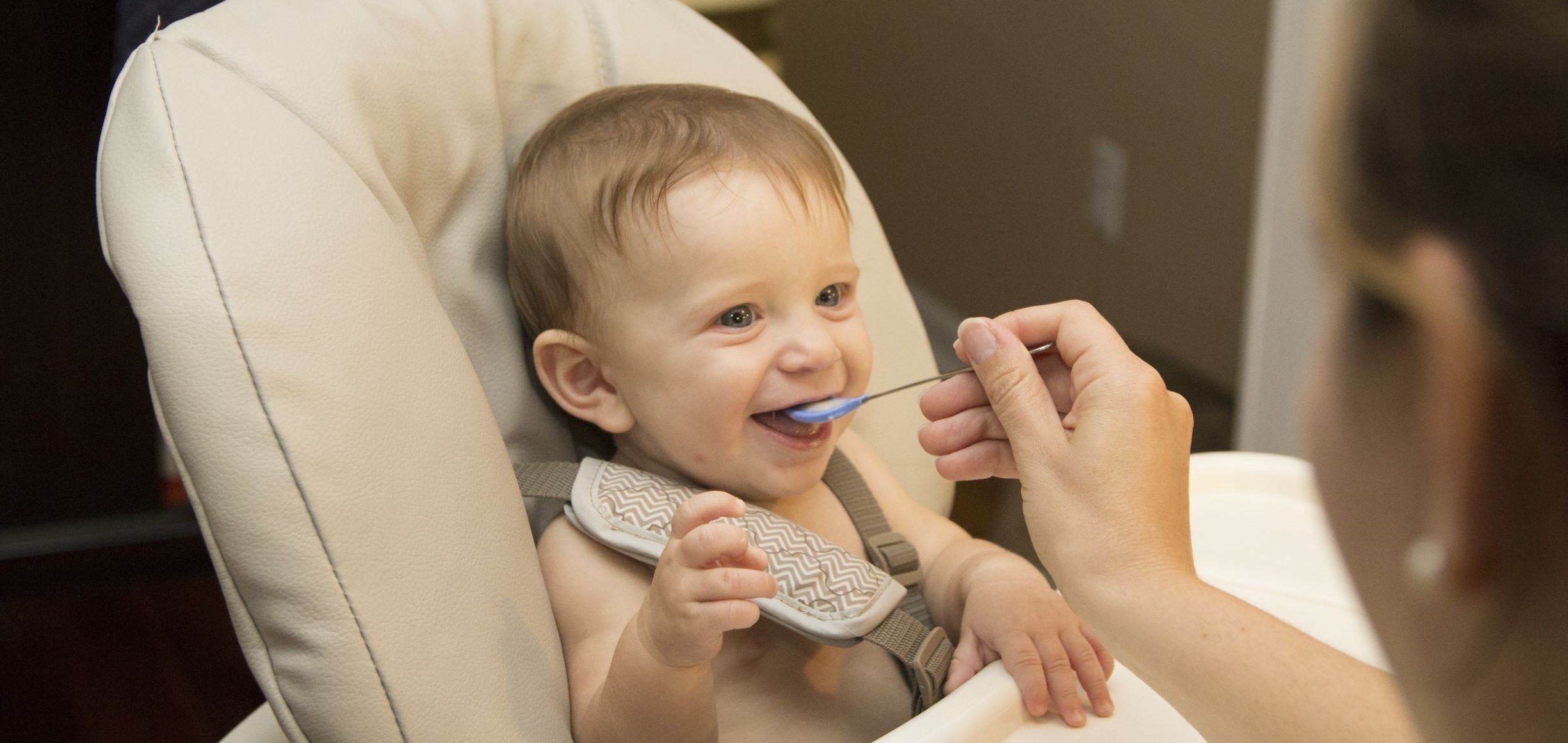
A dramatic rise in food allergies over the past 20 years had Australian medical professionals scratching their heads, with three in every ten babies born each year developing food-related allergy or eczema.
(Central) Auditory Processing Disorder ([C]APD) is an umbrella term for children who have difficulty with listening, despite normal hearing. Children with (C)APD frequently experience academic, behavioural, emotional, cognitive and social difficulties, and lack accessible, long-lasting wholistic treatments. Hence, a transdisciplinary intervention has been developed – Auditory-Cued Exercise Therapy.
Nontypeable Haemophilus influenzae (NTHi) is the most common bacterial otopathogen associated with otitis media (OM). NTHi persists in biofilms within the middle ears of children with chronic and recurrent OM. Australian Aboriginal children suffer exceptionally high rates of chronic and recurrent OM compared to non-Aboriginal children.
The recent increase in babies born with brain and eye malformations in Brazil is associated with Zika virus (ZIKV) infection in utero. ZIKV alters host DNA methylation in vitro. Using genome-wide DNA methylation profiling we compared 18 babies born with congenital ZIKV microcephaly with 20 controls. We found ZIKV-associated alteration of host methylation patterns, notably at RABGAP1L which is important in brain development, at viral host immunity genes MX1 and ISG15, and in an epigenetic module containing the causal microcephaly gene MCPH1. Our data support the hypothesis that clinical signs of congenital ZIKV are associated with changes in DNA methylation.
Exome sequencing has enabled molecular diagnoses for rare disease patients but often with initial diagnostic rates of ~25-30%. Here we develop a robust computational pipeline to rank variants for reassessment of unsolved rare disease patients. A comprehensive web-based patient report is generated in which all deleterious variants can be filtered by gene, variant characteristics, OMIM disease and Phenolyzer scores, and all are annotated with an ACMG classification and links to ClinVar.
Presence of bacterial otopathogen in the middle ear during ventilation tube insertion was a predictor of children at-risk of repeat ventilation tube insertion
Elevated antimicrobial proteins and peptides and cytokines in middle ear effusion are a marker of inflammation and bacterial persistence
Here we focus on the problem of prioritising variants with respect to the observed disease phenotype
PCV10 did not reduce NTHi density in the nasopharynx or middle ear, and was associated with increased pneumococcal nasopharyngeal density