
Search
Showing results for "Childhood interstitial lung disease "
We observed S. aureus infections in Fiji in both community and hospital settings with an emphasis on clonal complex genotyping and antimicrobial susceptibility.
Vitamin D is synthesised by ultraviolet (UV) irradiation of skin and is hypothesized to be a direct mediator.
The Western Australian Influenza Vaccine Effectiveness study commenced in 2008 to evaluate a new program to provide free influenza vaccine to all children...
Influenza vaccine was offered to all children aged 6-59 months resident in Western Australia in 2008, and we wished to evaluate the effectiveness of this immunisation programme.

Research to eliminate one of the world’s deadliest diseases – malaria – will be accelerated thanks to a USD $4.7 million grant from the Gates Foundation for scientists at The Kids Research Institute Australia and The University of Western Australia (UWA).
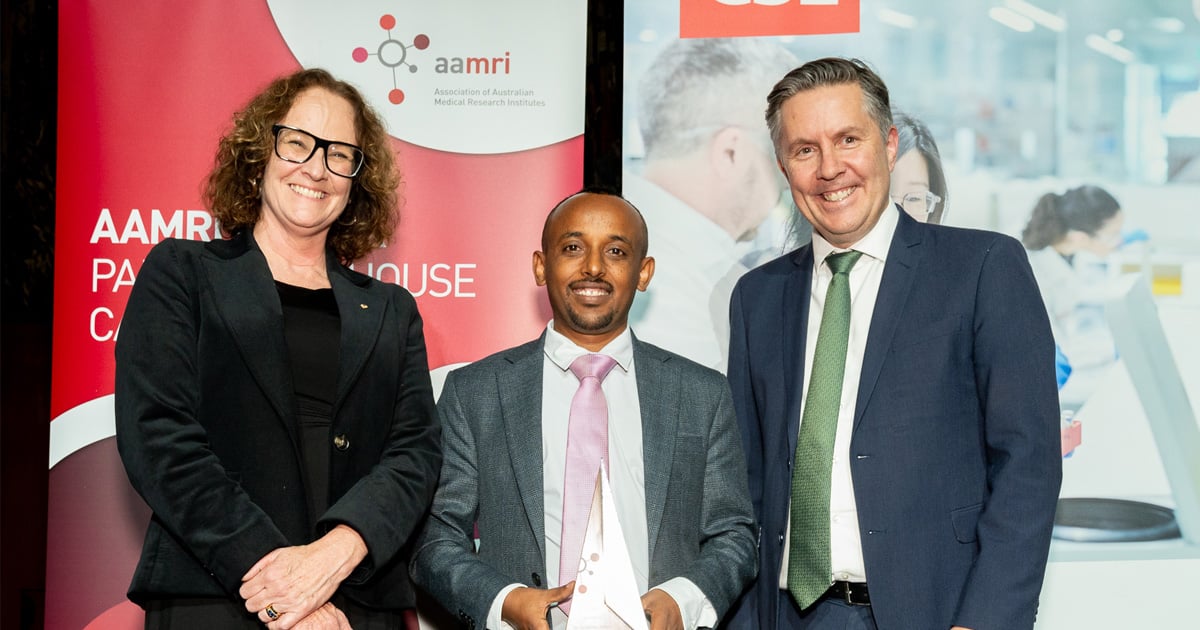
Dr Kefyalew Alene, who heads the Geospatial and Tuberculosis team at The Kids and is a senior research fellow within the Curtin School of Population Health, has used cutting edge technology to transform the way TB transmission is predicted, understood and managed globally.

Congratulations to four outstanding The Kids Research Institute Australia researchers who have received funding designed to support researchers who have narrowly missed out on highly competitive national funding.

A national alliance of the brightest minds in genomic science, academia, policy makers, industry and Indigenous leaders will work to break down barriers to ensure Aboriginal and Torres Strait Islander people can benefit from advances in genomic medicine if they choose.

An international leader in the analysis and mapping of big data sets to tackle disease has been appointed The Kerry M Stokes Chair of Child Health.
Sex hormones, such as oestrogen and testosterone, display significant immune modulatory properties. This is highly relevant for transgender (trans) people who undergo gender-affirming hormone (GAH) treatment. However, only a limited number of studies have evaluated the immunological impact of GAH treatments, and almost none have assessed the impact in trans young people.