
Search
Showing results for "early childhood"
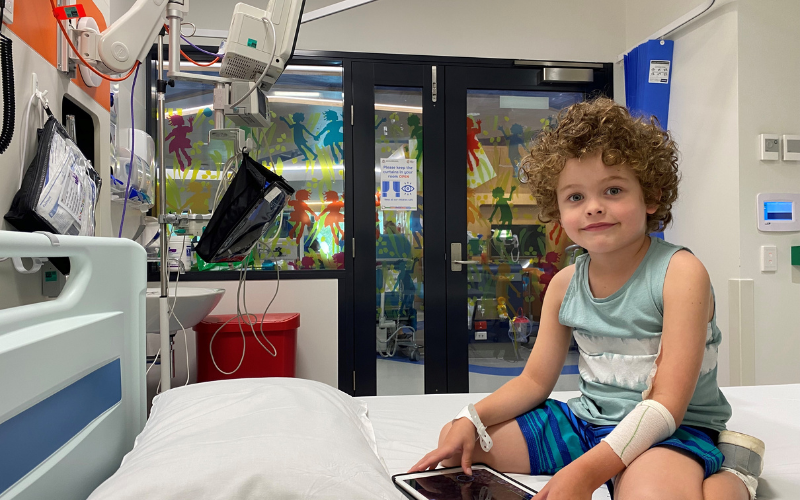
Access to phage therapy, a treatment option for antibiotic resistant superbugs, is now one step closer for people with CF in WA thanks to a $500,000 donation from Conquer Cystic Fibrosis to the Wal-yan Respiratory Research Centre.
Children in Papua New Guinea (PNG) are at high risk of pneumococcal infections. We investigated pneumococcal carriage rates, serotype distribution, and antimicrobial susceptibility in PNG children after vaccination with 10-valent or 13-valent pneumococcal conjugate vaccines (PCV10; PCV13).
Studies on health insurance coverage often rely on measures self-reported by respondents, but the accuracy of such measures has not been thoroughly validated. This paper is the first to use linked Australian National Health Survey and administrative population tax data to explore the accuracy of self-reported private health insurance (PHI) coverage in survey data.
In this project, our team provides malaria vaccine impact predictions to inform vaccine investment strategies for Gavi, the Vaccine Alliance, and their partners.

A new ongoing Q & A series focusing on different research themes within the Children’s Diabetes Centre - focus: exercise team.
Alexithymia—a trait characterized by difficulties in emotion processing—is of high interest in the autism field. However, the lack of validated alexithymia measures for autistic individuals limits progress. This study aimed to address this gap by examining the psychometric properties of the Perth Alexithymia Questionnaire (PAQ) across autistic and non-autistic samples. Using the PAQ, we investigated how alexithymia manifests in autistic individuals and its links with poor mental health outcomes (anxiety).
Pain is a common experience associated with healthcare for children, who often recall it as the worst part of hospitalisation. Several factors make assessment of pain more challenging in children. Families have previously identified the development of improved tools to assess pain in children as a key priority. We therefore sough to investigate the nature of this experience from the perspective of children and their parents to inform the development of such tools.
The clinical consequences of an antibiotic allergy label are detrimental, impacting health care delivery and patient outcomes. We assessed hospital inpatients with intent to offer free antibiotic allergy labeling assessment within a randomized controlled trial. We sought to determine the feasibility of establishing an adult antibiotic allergy delabeling service in a Western Australian tertiary public hospital.
International consensus definitions for invasive aspergillosis (IA) in research are rigorous, yet clinically significant cases are often excluded from clinical studies for not meeting proven/probable IA case definitions. To better understand reasons for the failure to meet criteria for proven/probable infection, we herein review 47 such cases for their clinical and microbiological characteristics and outcomes.
Each year, approximately 1000 children in Australia and New Zealand, aged 0–14 years, are diagnosed with cancer. Despite paediatric cancer accounting for less than 1% of all cancer cases, the impact on their families and communities is profound and disproportionate.