
Search
Showing results for "Childhood interstitial lung disease "
Young children, particularly those younger than six (6) months are at increased riskof severe influenza infection.

The Kids is investigating whether a cystic fibrosis medication may be the answer to ear infections, reducing the need for antibiotics and surgery.
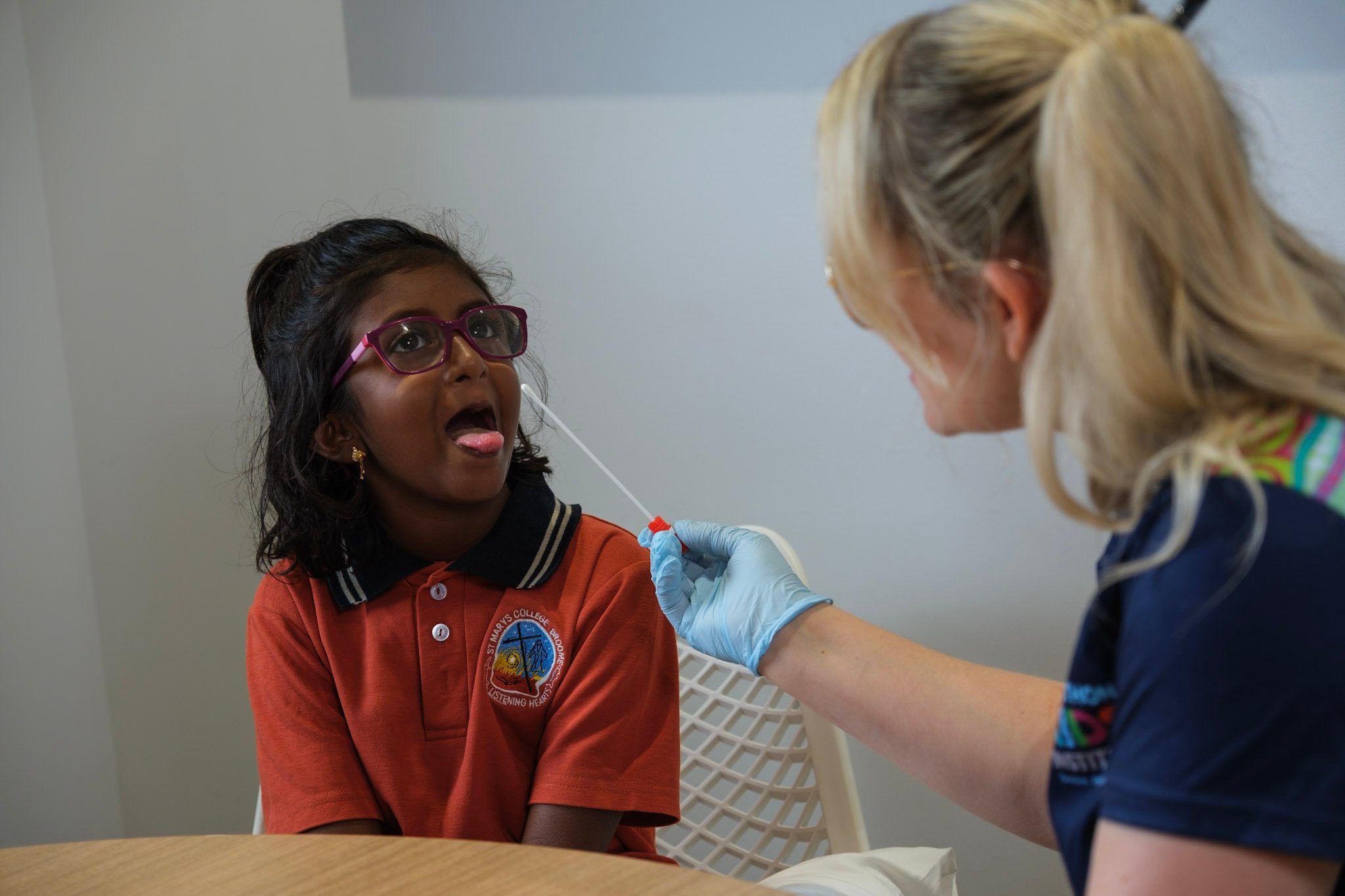
An alarming number of Strep A infections are going unnoticed throughout classrooms in Broome and Derby according to a major study by The Kids Research Institute Australia aiming to reduce the burden of acute rheumatic fever (ARF) and rheumatic heart disease (RHD).

A large-scale study of the epigenetic landscape of Indigenous Australians could help tackle chronic diseases faced by Aboriginal and Torres Strait Islander people.
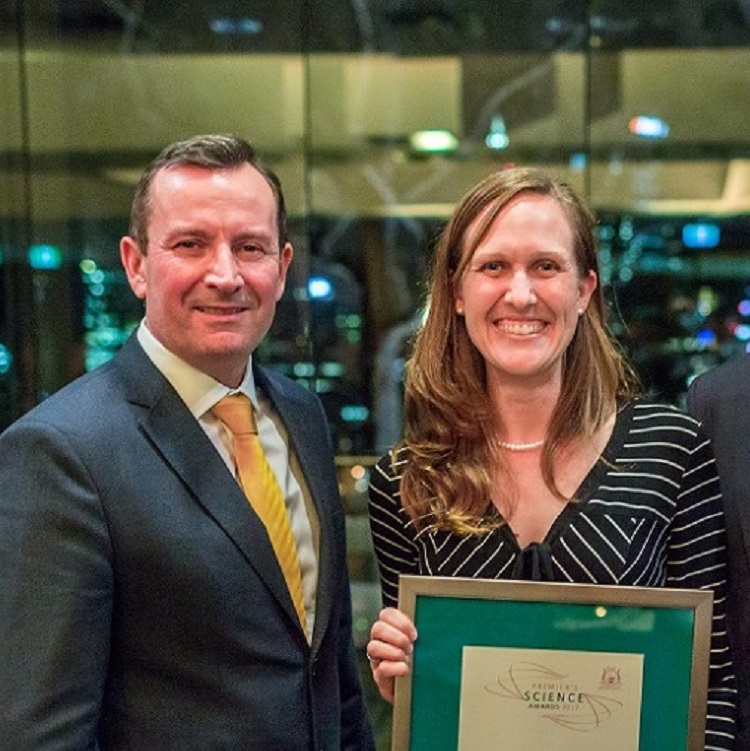
Infectious diseases researcher, Dr Asha Bowen, has won the Early Career Scientist of the Year Premier's Science Award for 2017.
There is a greater prevalence of multiple sclerosis (MS), a neurological autoimmune condition, in populations living further from the equator, hypothesised to be due to reduced sunlight exposure. There exists a proven sunlight surrogate therapy for dermatological inflammatory conditions, in the form of narrowband NB-UVB phototherapy. Yet, there is a paucity of randomized trials of the therapeutic delivery of NB-UVB beyond dermatology for conditions with a systemic inflammatory component.
Respiratory syncytial virus (RSV) reinfection in children is poorly understood. We examined the incidence, characteristics, and outcomes of hospital-attended RSV reinfections in children <16 years in Western Australia between 2012 and 2022.
Respiratory syncytial virus (RSV) remains a leading cause of mortality and morbidity worldwide. RSV seasonality was disrupted by COVID-19-associated nonpharmaceutical interventions (NPIs). We review RSV seasonality, molecular epidemiology, clinical manifestations, and community awareness to inform future prevention strategies.
Children with comorbidities are at greater risk of severe influenza outcomes compared with healthy children. In Australia, influenza vaccination was funded for those with comorbidities from 2010 and all children aged <5 years from 2018. Influenza vaccine coverage remains inadequate in children with and without comorbidities.
Christopher Hannah Blyth Moore MBBS (Hons) DCH FRACP FRCPA PhD OAM BSc (Hons) GradDipClinEpi PhD Centre Head, Wesfarmers Centre of Vaccines and