
Search
Showing results for "clinical trials"
Dr Hansen’s study found children born through ART had a twofold risk of having a birth defect. The results were published in the prestigious New England Journal
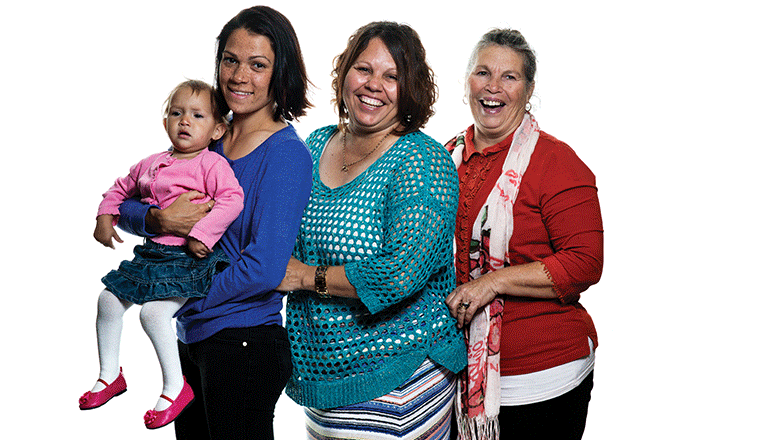
A multi-faceted study led by a Murdoch University researcher will influence the way maternity services support Aboriginal women in WA during pregnancy and birth
A new study has found that the genetic flaw responsible for Rett syndrome can strike males, even where there isn't a family history of the rare brain disorder.
NEC Australia has joined forces with The Kids Research Institute Australia to ensure a state-of-the-art ICT system is in place at the new Perth Children’s Hospital.
Anya Deborah Pat Jones Strickland Holt BSc MSc PhD PhD PhD, DSc, FRCPath, FRCPI, FAA Honorary Research Associate Head, Pregnancy and Early Life
Wesfarmers Centre of Vaccines & Infectious Diseases resources
Community links and support services
This review aims to systematically identify contextual and mechanistic factors that contribute to the success or failure of implementing effective HCs in the prevention and early detection of chronic diseases among Aboriginal and Torres Strait Islander people in Australian primary health care (PHC).
Aboriginal and Torres Strait Islander children continue to be removed at high rates from their families by child protection services, placing them at elevated risk of adverse long-term life outcomes. Cultural connection in out-of-home care is essential for mitigating the impacts of trauma from removal, emphasizing the importance of ensuring that cultural planning is rigorously undertaken. This article explores the provision of cultural plans in an era where out-of-home care services are outsourced by government, but where government holds onto the responsibility for developing cultural plans for children in care.
Abstract: To examine the association between mental health workforce supply and spatial clusters of high versus low incidence of youth suicide.