
Search
Showing results for "autism"
Greater facial asymmetry has been consistently found in children with autism spectrum disorder (ASD) relative to children without ASD. There is substantial evidence that both facial structure and the recurrence of ASD diagnosis are highly heritable within a nuclear family. Furthermore, sub-clinical levels of autistic-like behavioural characteristics have also been reported in first-degree relatives of individuals with ASD, commonly known as the 'broad autism phenotype'.
Birth order effects have been linked to variability in intelligence, educational attainment and sexual orientation. First- and later-born children have been linked to an increased likelihood of an Autism Spectrum Disorder (ASD) diagnosis, with a smaller body of evidence implicating decreases in cognitive functioning with increased birth order.
The study of temperament in Autism Spectrum Disorder (ASD) has the potential to provide insight regarding variability in the onset, nature, and course of both core and co-morbid symptoms. The aim of this systematic review was to integrate existing findings concerning temperament in the context of ASD. Searches of Medline, PsychInfo and Scopus databases identified 64 relevant studies. As a group, children and adolescents with ASD appear to be temperamentally different from both typically developing and other clinical non-ASD groups, characterized by higher negative affectivity, lower surgency, and lower effortful control at a higher-order level.
This study examines the association of autism spectrum traits, depressive symptoms and suicidal behaviour in individuals with psychotic experiences
We examined early signs of ASD in infants wit tuberous sclerosis complex, approximately 50% of whom will meet criteria for ASD by age 3.
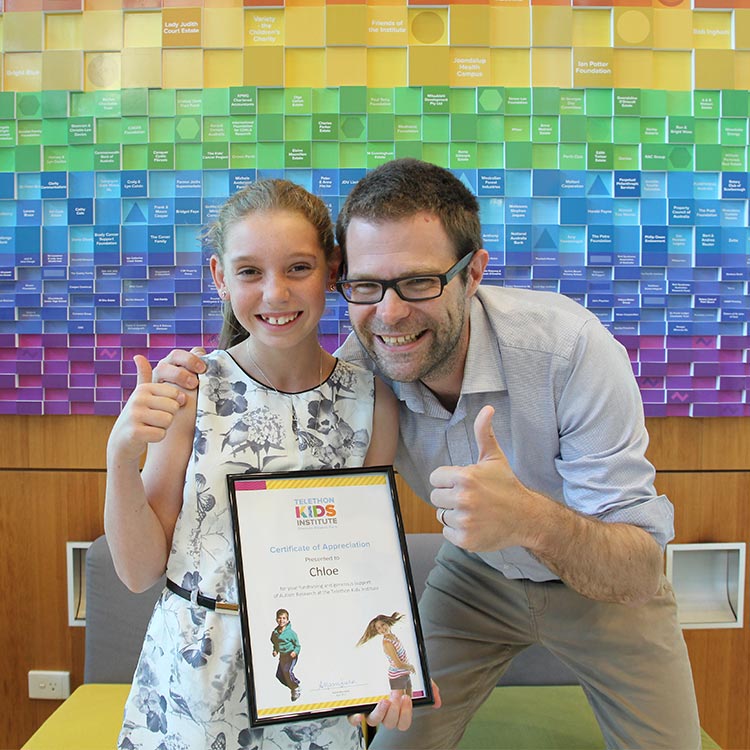
Chloe recently decided to bake cupcakes to sell to her school friends and teachers and it was all for a cause very close to her heart - autism research.
We tested whether maternal vitamin D insufficiency during pregnancy is related to the autism phenotype.
The etiology of autism spectrum disorders is unknown but there are claims of increasing prevalence in many countries.
This paper discusses changes in diagnostic criteria, decreasing age at diagnosis, improved case ascertainment, diagnostic substitution, and social influences.
This article tests the hypothesis that individuals with autism poorly encode verbal information to the semantic level of processing, instead paying greater...