
Search
Showing results for "mental health aboriginal"
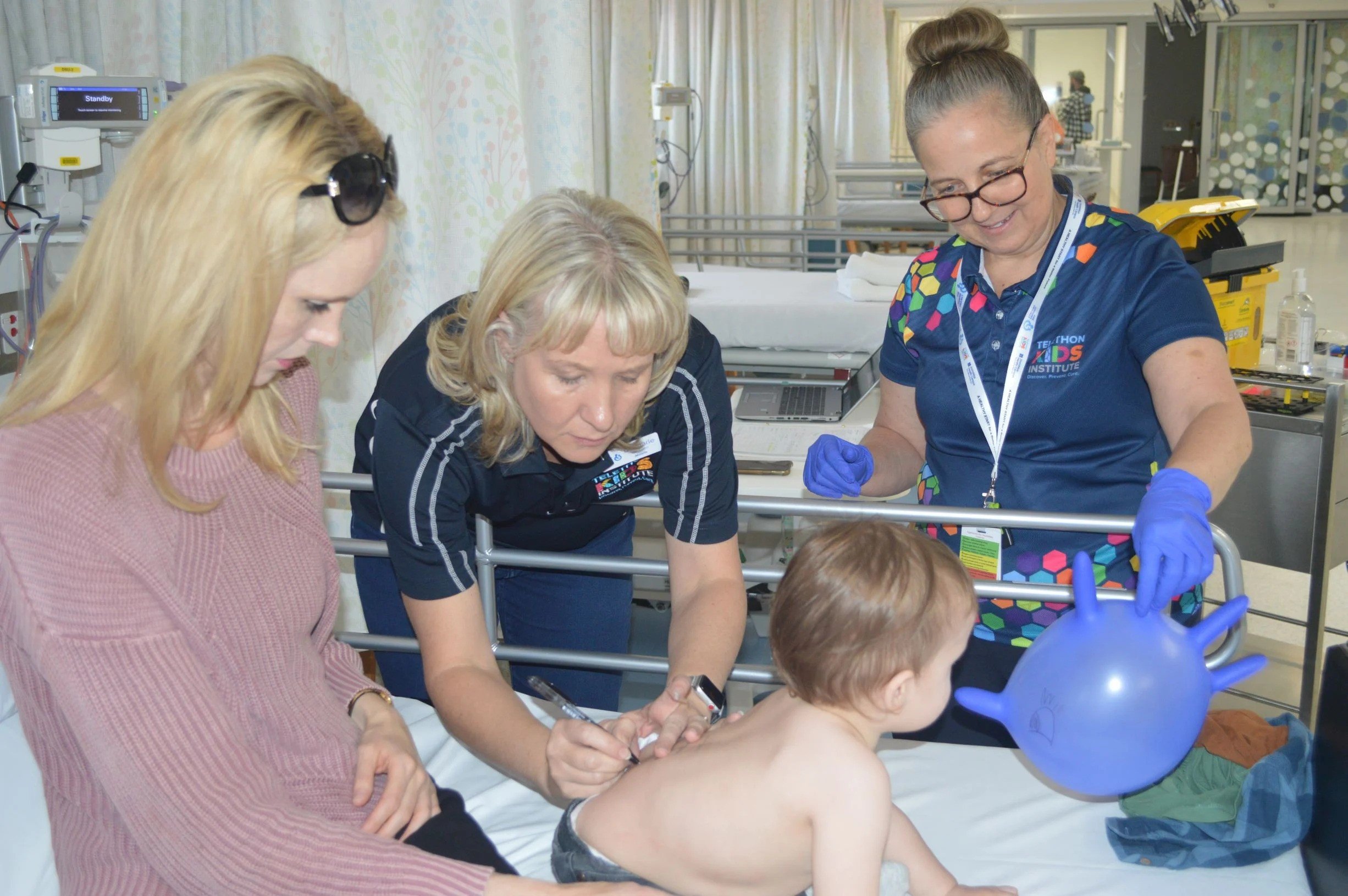
This fellowship will assist Associate Professor Palmer in her large-scale food allergy prevention trials.

ORIGINS' SYMBA study awarded State Government grant to extend vital research into allergies

Plastics in Pregnancy (Phase One)
Twenty-five families of girls who underwent a spinal fusion between 2006-2012 were interviewed to explore the course of their daughter's recovery.
Impaired oxygen delivery or blood flow to the brain around the time of birth can cause injury. Hypoxic ischaemic encephalopathy is a leading cause of death and disability in term and near-term infants.
Contact investigations with drug-susceptible tuberculosis (DS-TB) patients have demonstrated a high prevalence of tuberculosis infection (TBI). However, the prevalence of TBI among individuals in close contact with drug-resistant tuberculosis (DR-TB) patients is poorly understood. This systematic review and meta-analysis aimed to determine the prevalence of TBI among household and non-household contacts of DR-TB patients.
The structures and functions of organelles in cells depend on each other but have not been systematically explored. We established stable knockout cell lines of peroxisomal, Golgi and endoplasmic reticulum genes identified in a whole-genome CRISPR knockout screen for inducers of mitochondrial biogenesis stress, showing that defects in peroxisome, Golgi and endoplasmic reticulum metabolism disrupt mitochondrial structure and function.
The structure and function of infant skin is not fully developed until 34 weeks of gestation, and this immaturity is associated with risk of late-onset sepsis (LOS). Topical coconut oil improves preterm-infant skin integrity and may reduce LOS. However, data on early-life skin-microbiome succession and potential effects of emollient skin care in preterm infants are scarce.
The rising burden of mosquito-borne diseases in Europe extends beyond urban areas, encompassing rural and semi-urban regions near managed and natural wetlands evidenced by recent outbreaks of Usutu and West Nile viruses. While wetland management policies focus on biodiversity and ecosystem services, few studies explore the impact on mosquito vectors.
Expression of the compact mitochondrial genome is regulated by nuclear encoded, mitochondrially localized RNA-binding proteins (RBPs). RBPs regulate the lifecycles of mitochondrial RNAs from transcription to degradation by mediating RNA processing, maturation, stability and translation. The Fas-activated serine/threonine kinase (FASTK) family of RBPs has been shown to regulate and fine-tune discrete aspects of mitochondrial gene expression.