
Search
Showing results for "early lung health"

Head, Nutrition in Early Life

Rachelle Wicks is a Research Fellow at CliniKids.

The Early Start Screen Smart Program was developed with parents, for parents and professionals, and backed by research.
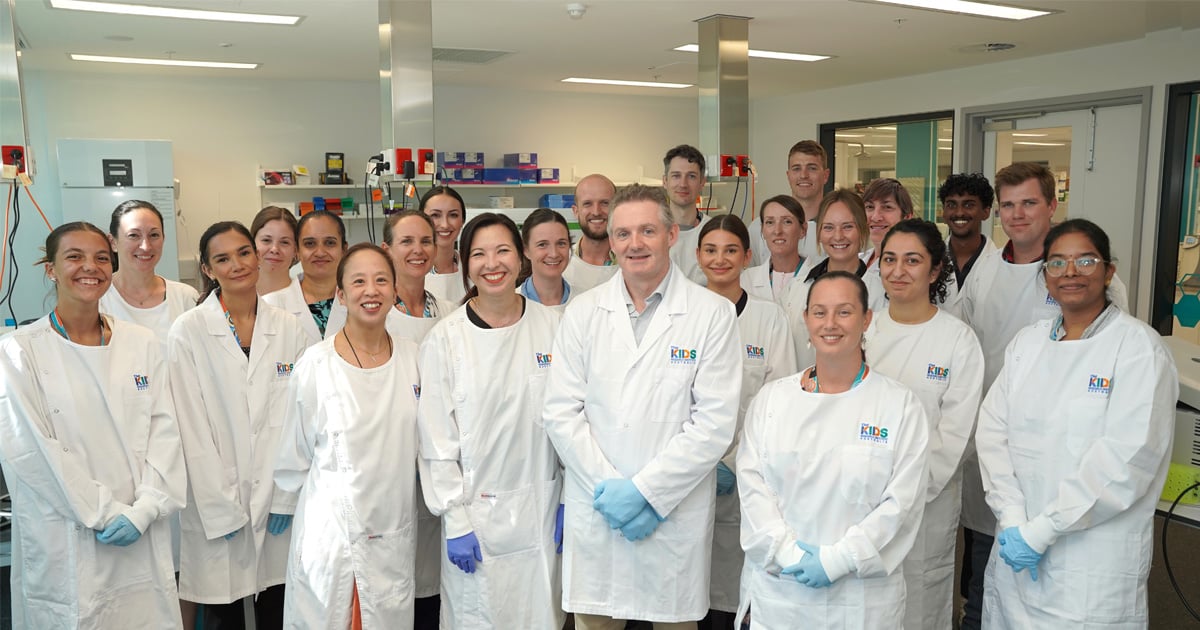
At The Kids Research Institute Australia, our Brain Tumour Research team is leading the charge to change the story for children diagnosed with brain cancer by working on safer, more effective treatments.
Child anthropometric deficits remain a major public health problem in Sub-Saharan Africa (SSA) and are a key target of the UN Sustainable Development Goals (SDGs). The SDGs recommend disaggregation of health indicators by ethnic group. However, few studies have assessed how ethnicity is associated with anthropometric deficits across SSA.
Tobias Strunk MD, PhD, FRACP Head, Neonatal Health tobias.strunk@thekids.org.au Head, Neonatal Health Clinical Professor Tobias Strunk is a
Tobias Strunk MD, PhD, FRACP Head, Neonatal Health tobias.strunk@thekids.org.au Head, Neonatal Health Clinical Professor Tobias Strunk is a
Despite there being an increasing number of applied flow studies across scientific disciplines, there exists no consistent or broadly applicable intervention to promote flow experiences. This study provides a detailed account of a new educational flow training program developed following recent advancements in the flow literature that have provided a more parsimonious understanding of flow experiences and antecedents.
In three experiments, we examine the role of motives underlying goal pursuit and the metacognitive strategy of mental contrasting with implementation intentions (MCII) to predict the strategic use of self-regulation responses (persistence, disengagement, and reengagement) when faced with attainable, unattainable, or multiple goals.
Although a healthy diet and physical activity have been shown to prevent or delay cardiovascular disease (CVD) hospitalizations and deaths, most adults do not meet current guidelines.