
Search
Showing results for "clinical trials"
To estimate the prevalence, distribution, and co-occurrence of mental ill-health and substance use among gender and sexuality diverse young people relative to their cisgender and heterosexual peers in Australia using population-level, nationally representative data.
This project will provide important policy directions for design of language educational programs in Australian schools, developing a multi-cultural society, multi-lingual workforce, sourcing of immigrants from different language backgrounds and English abilities in order to obtain the best developmental outcomes
The aim of this pilot study is to test if the CCTM approach is more effective than business as usual methods at supporting mental health consumers to reduce their tobacco dependence or quit smoking altogether.
We know from research that the risk of death from respiratory disease is 14 times higher for adults with cerebral palsy than for other adults. Respiratory disease is the most common cause of premature death in children and young people with cerebral palsy and one of the main causes of hospitalisation.

Congratulations to four outstanding early-career researchers from The Kids Research Institute Australia, who have been awarded BrightSpark Foundation fellowships and project funding for 2026.
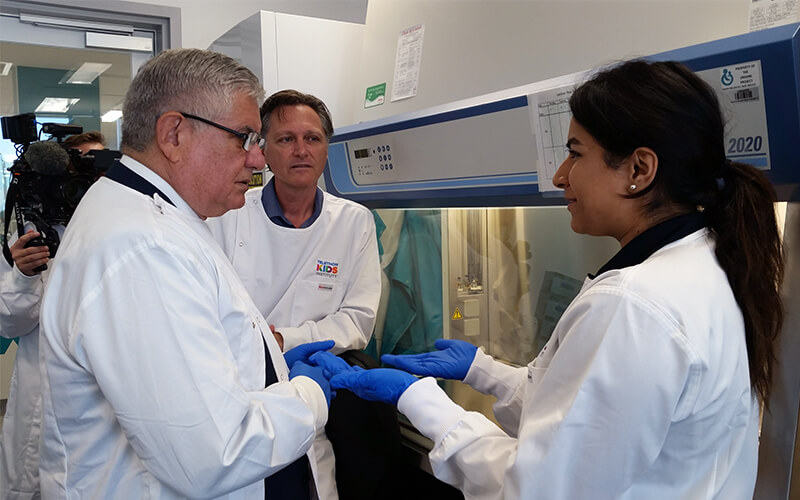
A vaccine to prevent rheumatic heart disease (RHD) and other life-threatening conditions caused by the common Strep A bacteria is a step closer thanks to funding announced by Minister for Indigenous Health, Hon Ken Wyatt AM, MP, in Perth today.

Child health and development researchers are increasingly turning to Western Australia's extensive population datasets for their ground-breaking work.
Perth researchers have found toxic and harmful chemicals in several dozen e-cigarette liquids readily available in Australia.
The current prophylactic treatment to prevent rheumatic heart disease requires four-weekly intramuscular injection of a suspension of the poorly soluble benzathine salt form of penicillin G (BPG) often for more than 10 years. In seeking to reduce the frequency of administration to improve adherence, biodegradable polymer matrices have been investigated.
Using a dataset of Australian children, we have the opportunity to not only investigate the transfer of educational resources across 3 generations in Australia.