
Search
Showing results for "Childhood interstitial lung disease "
Research has implicated that changes in Zn metabolism may be associated with the biological underpinnings of eating disorders, in particular anorexia nervosa.
Allergen specific immunotherapy aims to subvert or divert immune responses to allergens to ones that do not cause immunological hypersensitivities.
By using an anti-reticulon-1 Ab, a role for reticulon-1 in macrophage migration toward both CSF-1 and CCL2 was confirmed.
We think that variants in genes involved in fructose metabolism and ChREBP-FGF21 pathway interacts with SSB intake to exacerbate associations with SSB intake.

Two outstanding The Kids Research Institute Australia research leaders have been named finalists in the 2018 Western Australian of the Year Awards.
These results indicate that T regulatory (Treg) and follicular T regulatory (Tfr) impairment is an early feature in MS.
Emerging findings suggest a protective role for ultraviolet radiation (UVR) and sun exposure in reducing the development of obesity and cardiometabolic dysfunction, but more epidemiological and clinical research is required that focuses on measuring the direct associations and effects of exposure to UVR in humans.
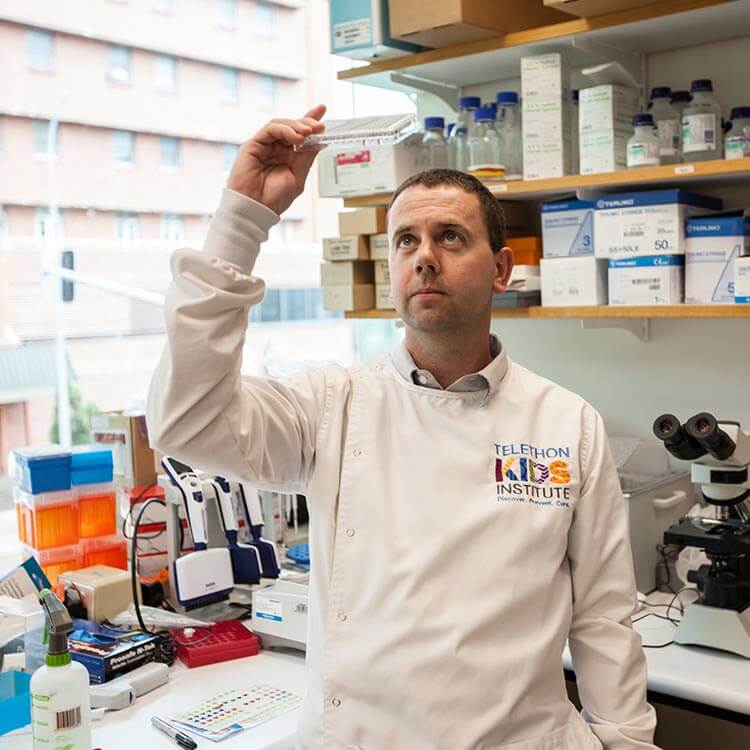
A The Kids Research Institute Australia researcher will investigate new ways to harness the body’s own immune system to fight melanoma, thanks to Cancer Council WA funding.

Efforts to improve health outcomes for Aboriginal children have been accelerated thanks to almost $1 million in National Health and Medical Research Council (NHMRC) funds awarded to skin health researchers at The Kids Research Institute Australia.
Aminoglycosides are commonly prescribed to children with febrile neutropenia (FN) but their impact on clinical outcomes is uncertain and extent of guideline compliance is unknown. We aimed to review aminoglycoside prescription and additional antibiotic prescribing, guideline compliance and outcomes for children with FN.