
Search
Showing results for "early lung health"
We investigate whether the profile of factors protecting psychosocial functioning of high risk exposed Australian Aboriginal youth are the same as those...
This study examines the relationships between the dose, pattern, and timing of prenatal alcohol exposure and achievement in reading, writing, spelling,...
This project aimed to identify the primordial determinants of RHD to inform prevention strategies.

A The Kids Research Institute Australia PhD student has been awarded Western Australia’s only 2022 postgraduate scholarship by the National Health and Medical Research Council
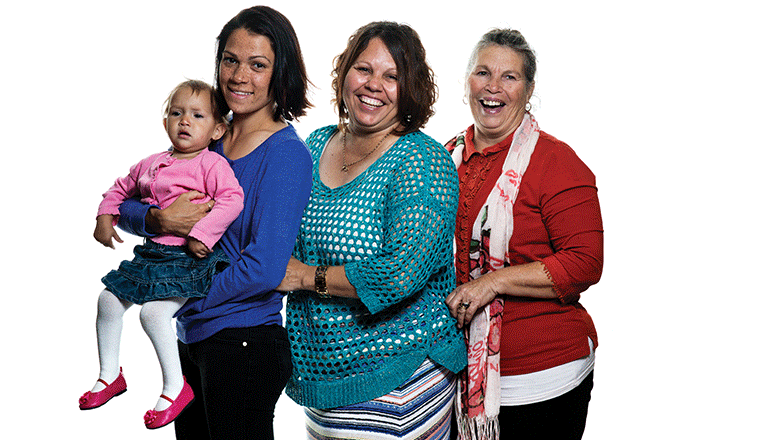
A multi-faceted study led by a Murdoch University researcher will influence the way maternity services support Aboriginal women in WA during pregnancy and birth
We examined risk of intellectual disability and other neuropsychiatric outcomes in children of mothers with and without schizophrenia, bipolar or depression.
Regular exercise can be beneficial for people living with a severe mental illness. By better understanding the perspectives and challenges of adults with severe mental illness who are engaged in exercise, we can enhance the design and implementation of exercise programs to better support their mental health and recovery.
Strong evidence supports our current understandings of student bullying behaviours and ways schools can prevent and respond effectively to bullying behaviour. In the late 1990’s, however, little was understood about the most effective ways to reduce bullying in Australian schools. In response to schools’ need for evidence-informed action, a pipeline of research called Friendly Schools was initiated in 1999 which for the past twenty years, has provided robust whole-school evidence-based knowledge and skills to support policy makers, school staff and other practitioners working in schools and families across Australia.
Gina Nicole Trapp Hanna BHSc(Hons1A), RPHNutr, PhD BHlthSc (Hons) Honorary Research Associate Program Manager 08 6319 1033 Gina.Trapp@thekids.org.au
Infant growth trajectory may influence later-life obesity. Human milk provides a wide range of nutritional and bioactive components that are vital for infant growth. Compared to formula-fed infants, breastfed infants are less likely to develop later-onset obesity, highlighting the potential role of bioactive components present in human milk.