
Search
The Australasian Society of Clinical Immunology and Allergy (ASCIA) Guideline: Infant Feeding for Food Allergy Prevention is an update of the 2016 ASCIA guideline. This updated guideline provides recommendations specifically in relation to infant feeding for food allergy prevention.
Disease spreading models such as the ubiquitous SIS compartmental model and its numerous variants are widely used to understand and predict the behavior of a given epidemic or information diffusion process. A common approach to imbue more realism to the spreading process is to constrain simulations to a network structure, where connected nodes update their disease state based on pairwise interactions along the edges of their local neighborhood.
Scedosporium species are filamentous fungi with inherent broad antifungal resistance that pose opportunistic infection threats. We present draft genome assemblies of S. aurantiacum (11 contigs) and S. apiospermum (9 contigs), derived from Oxford Nanopore sequencing of one Australian clinical isolate each.
Tracheobronchomalacia (TBM) is characterised by abnormal collapsibility of the trachea and bronchi, often seen in children with cystic fibrosis (CF). This study aims to determine the impact of TBM on hospital admissions in young children with CF.
Evaluate the effectiveness of training workshops aiming to improve researchers' consumer and community involvement (CCI) related awareness, attitudes, and behaviours, and capture remaining barriers to CCI.

A song written by kids in Barunga as part of the END RHD Communities Project is helping prevent the spread of infections that cause rheumatic heart disease in remote Aboriginal Communities.

In 2020, the National Closing the Gap partnership made improving early development of Aboriginal and Torres Strait Islander children one of its top priorities. Australia will measure progress in this area using the AEDC.

Researchers went into 79 WA primary and secondary schools in 2020 and found increased levels of emotional distress among students and families.
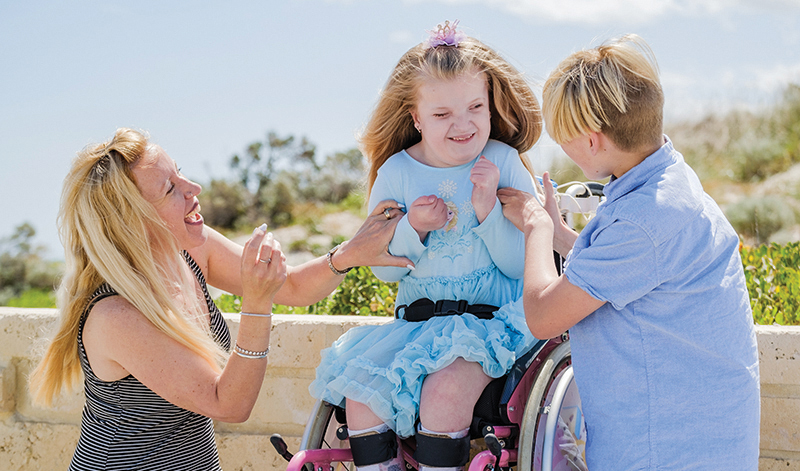
For thousands of WA children living with undiagnosed diseases, it’s hope.
Childcare centres have flocked to take up a new evidence-based policy to help ensure young children get more of the physical activity they need to be healthy and developmentally on track.