Skip to content

Search

Showing results for "early lung health"

Setting research goals hand in hand with the community

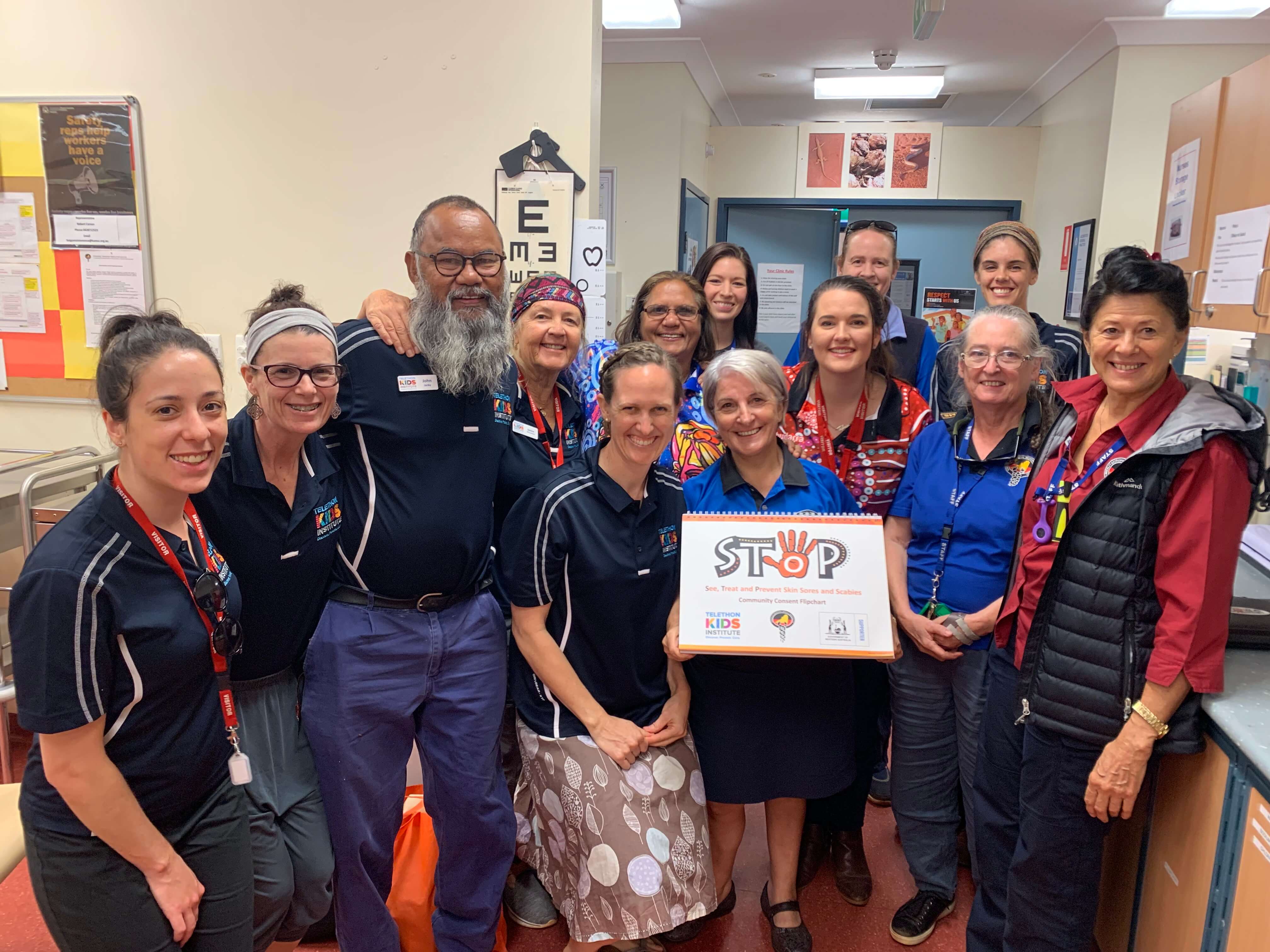
The Kids Research Institute Australia has long been recognised for the research it produces. But the way the Institute collaborates with the community – asking what they most want or need to know about and tailoring research to deliver those outcomes – is also leading the way.

Controlled Human Infection for Penicillin Against Streptococcus pyogenes – a double blinded randomised trail (The CHIPS trial)

In Australia, RHD-related death and disability is the leading driver of cardiovascular inequality between Indigenous and non-Indigenous Australians.

Development of a universal aftercare model for people who have presented to the emergency department for a suicidal crisis in WA

The Mental Health Commission (MHC) of Western Australia has provided funding to The Kids Research Institute Australia to undertake exploratory research to inform a WA approach to aftercare.

Value profile for Malaria vaccines and monoclonal antibodies1

Malaria remains a leading cause of morbidity and mortality and is responsible for over 0.5 million annual deaths globally. During the first two decades of this century, scale-up of a range of tools was associated with significant reductions in malaria mortality in the primary risk group, young African children.

Prioritizing high-risk populations for soil-transmitted helminth control in the Western Pacific Region

To achieve targets set within the 2030 Sustainable Development Agenda and the 2021–2030 Neglected Tropical Diseases (NTD) Roadmap, the World Health Organization identify the need for improved data analytics to inform NTD control programs. 

A roadmap for understanding sulfadoxine-pyrimethamine in malaria chemoprevention

Melissa Penny PhD, PD, BSc (Hons) Professor Fiona Stanley Chair in Child Health Research melissa.penny@thekids.org.au Professor Fiona Stanley Chair

AnophelesModel: An R package to interface mosquito bionomics, human exposure and intervention effects with models of malaria intervention impact

In recent decades, field and semi-field studies of malaria transmission have gathered geographic-specific information about mosquito ecology, behaviour and their sensitivity to interventions. Mathematical models of malaria transmission can incorporate such data to infer the likely impact of vector control interventions and hence guide malaria control strategies in various geographies.

Intervention effect of targeted workplace closures may be approximated by single-layered networks in an individual-based model of COVID-19 control

Individual-based models of infectious disease dynamics commonly use network structures to represent human interactions. Network structures can vary in complexity, from single-layered with homogeneous mixing to multi-layered with clustering and layer-specific contact weights. Here we assessed policy-relevant consequences of network choice by simulating different network structures within an established individual-based model of SARS-CoV-2 dynamics.

Seasonal malaria chemoprevention and the spread of Plasmodium falciparum quintuple-mutant parasites resistant to sulfadoxine–pyrimethamine: a modelling study

Seasonal malaria chemoprevention (SMC) with sulfadoxine-pyrimethamine plus amodiaquine prevents millions of clinical malaria cases in children younger than 5 years in Africa's Sahel region. However, Plasmodium falciparum parasites partially resistant to sulfadoxine-pyrimethamine (with quintuple mutations) potentially threaten the protective effectiveness of SMC. We evaluated the spread of quintuple-mutant parasites and the clinical consequences. 

Estimating measures to reduce the transmission of SARS-CoV-2 in Australia to guide a ‘National Plan’ to reopening

The availability of COVID-19 vaccines promised a reduction in the severity of disease and relief from the strict public health and social measures (PHSMs) imposed in many countries to limit spread and burden of COVID-19. We were asked to define vaccine coverage thresholds for Australia's transition to easing restrictions and reopening international borders.